
Delhi Demonstrations Over Electoral Rolls Spark Political Friction and Institutional Concerns
Opposition leaders were detained in New Delhi during demonstrations demanding the election chief resign over revised voter rolls, raising questions regarding governance stability.
Geopolitical & Core Developments
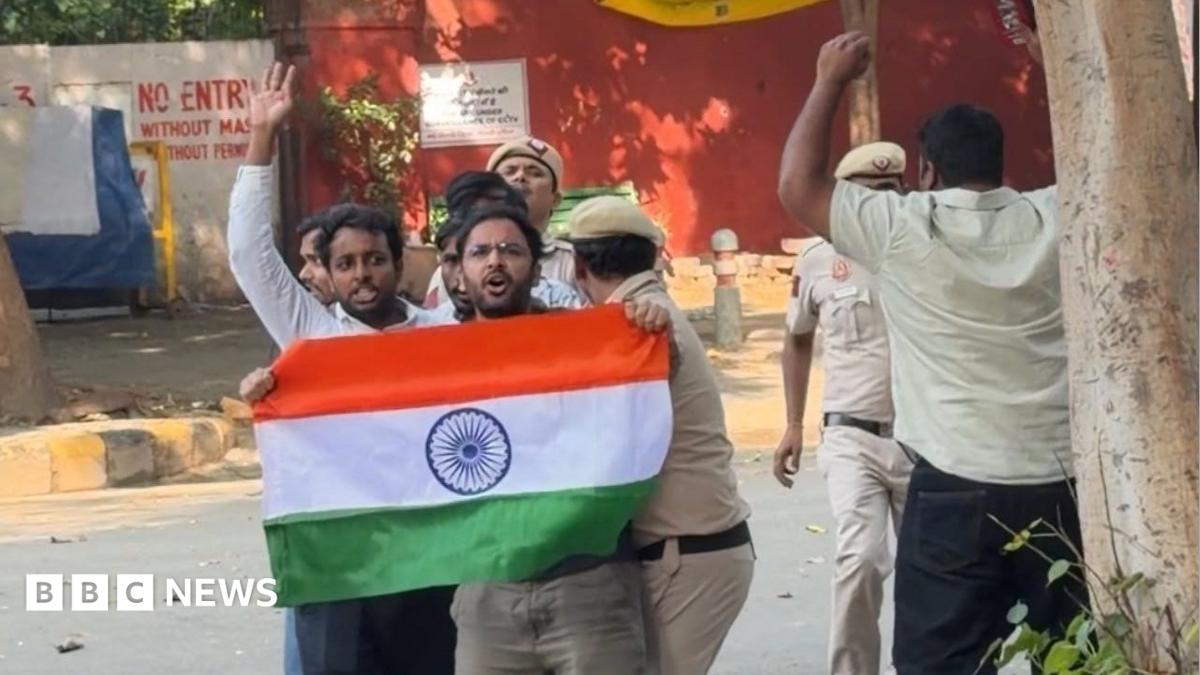
Security forces in central New Delhi detained several high-profile opposition leaders and political activists following an unauthorized demonstration that breached high-security perimeters. The confrontation unfolded adjacent to the Election Commission of India headquarters, where demonstrators gathered to demand the immediate resignation of the Chief Election Commissioner. The unrest follows accusations that recently revised voter lists disenfranchised key demographic groups across strategically vital electoral districts.
Clashing with rapid deployment units, demonstrators scaled steel barricades before being intercepted and placed into administrative detention. Authorities deployed multi-layered cordons and restricted pedestrian transit along central ministerial corridors to prevent broader escalation. Opposition coalitions allege that systemic irregularities in electoral roll revisions have undermined democratic processes ahead of upcoming state and regional contests. Government officials, conversely, maintained that the protests represent an unlawful disruption aimed at undermining autonomous constitutional bodies, asserting that electoral updates adhere strictly to transparent legal frameworks.
Global Trade & Economic Ripples
While localized political demonstrations in the capital rarely halt national production, international asset managers and commodity trading desks closely assess the broader implications for policy continuity. Sustained domestic friction often distracts legislative focus from key structural reforms, infrastructure execution, and bilateral trade pact negotiations. As India positions itself as a primary alternative in global supply chain diversification strategies—particularly within electronics manufacturing, pharmaceuticals, and industrial components—institutional predictability remains paramount for foreign direct investment flows.
The immediate impact on currency markets was subdued, with the Indian rupee demonstrating marginal volatility against the U.S. dollar, supported by central bank liquidity interventions. However, sustained institutional standoffs can introduce a modest risk premium on sovereign debt yields and corporate borrowing costs. In the commodity sector, domestic industrial demand for crude oil, base metals, and agricultural inputs remains underpinned by macroeconomic indicators, though prolonged civil friction carries the potential to intermittently disrupt regional transit corridors and downstream distribution logistics in northern India.
International Reactions & Diplomatic Stances
Multilateral bodies and international diplomatic missions in New Delhi have monitored the developments cautiously. While global institutions typically classify domestic electoral administration matters as internal sovereign affairs, international governance monitoring groups emphasized the necessity of upholding peaceful assembly rights and institutional transparency. Diplomatic counterparts from key G20 partner nations have refrained from issuing formal critiques, seeking to maintain steady diplomatic engagements amid ongoing geopolitical negotiations in the Indo-Pacific.
Market research analysts and emerging-market credit rating agencies underscored that institutional stability and legal recourse mechanisms are fundamental pillars supporting India's economic expansion narrative. Analysts highlighted that clear communication from electoral authorities regarding voter registry verification procedures will be critical in neutralizing opposition rhetoric and reassuring external stakeholders regarding democratic continuity.
Strategic Outlook & Future Scenarios
The trajectory of the current standoff depends heavily on whether opposition parties seek judicial remedies via the Supreme Court of India or intensify street-level demonstrations. Should legal petitions be filed challenging the voter list revisions, judicial oversight could provide an institutional off-ramp, temporarily defusing street friction. Conversely, continued mobilization across state capitals could escalate political polarization, potentially spilling into national parliamentary proceedings and slowing legislative business.
In the medium term, international investors will watch for any signs of broader social disruptions that could impede infrastructure progress or supply chain performance. With critical regional elections scheduled over the coming fiscal quarters, the ability of state institutions to conduct verifiable, uncontested electoral processes will serve as a definitive benchmark for political risk assessments and institutional integrity in South Asia.
Join Our Official WhatsApp Channel
Receive live commodity alerts, policy changes, and commercial intelligence directly on WhatsApp.