
Bahrain Accelerates Push for Pakistan-GCC Free Trade Agreement
Bahrain has pledged to expedite the long-awaited free trade pact between Pakistan and the Gulf Cooperation Council, following high-level bilateral talks in Islamabad.
The Core Development
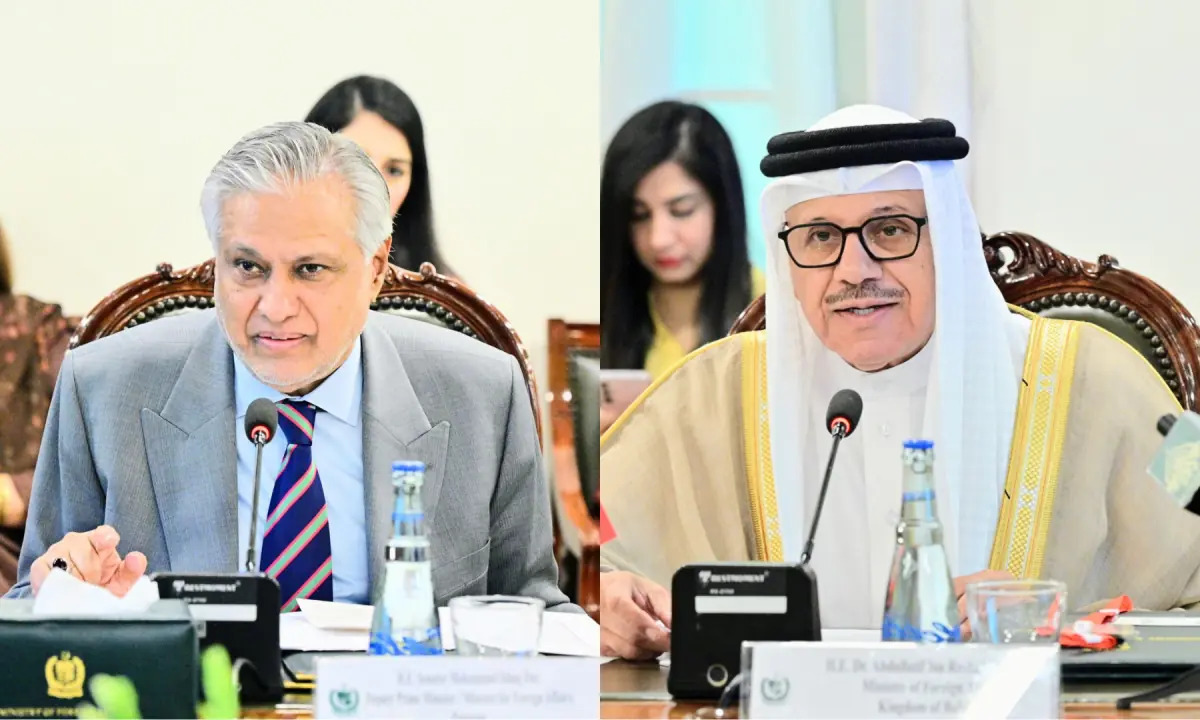
Bahrain announced on Thursday that it is actively working to accelerate the formal approval process for a comprehensive free trade agreement (FTA) between Pakistan and the Gulf Cooperation Council (GCC). The announcement followed the successful conclusion of the third session of the Pakistan-Bahrain Joint Ministerial Commission (JMC) held in Islamabad.
Bahrain’s Minister of Foreign Affairs, Dr Abdullatif bin Rashid Al Zayani, who arrived in Pakistan on a high-profile two-day official visit, co-chaired the strategic JMC proceedings alongside Pakistan's Deputy Prime Minister and Minister of Foreign Affairs, Senator Ishaq Dar. The high-level dialogue brought together key bureaucratic and economic policymakers from both nations to review the entire spectrum of bilateral relations, focusing heavily on trade expansion, investment facilitation, and institutional cooperation across multiple sectors.
Addressing a joint press briefing alongside Deputy Prime Minister Dar, Dr Al Zayani highlighted that the comprehensive JMC deliberations successfully encompassed more than 15 diverse fields of mutual interest. As a concrete outcome of these negotiations, both governments formally agreed to establish a dedicated Joint Working Group on Trade and Investment. Furthermore, both delegations finalized operational modalities to convene a specialized Joint Working Group on Energy next month, which will prioritize strategic partnerships in oil, gas, and mineral exploration and supply chains.
Commercial & Economic Implications
For Pakistan's export-driven sectors, wholesale distribution networks, and retail markets, the acceleration of the Pakistan-GCC free trade pact holds profound economic significance. The Gulf bloc represents one of the largest and most lucrative export destinations for Pakistani agricultural produce, textiles, manufactured goods, and skilled labor. A finalized FTA is expected to systematically dismantle tariff and non-tariff barriers, directly lowering transaction costs for Pakistani exporters and enhancing price competitiveness in lucrative Middle Eastern markets.
On the import front, closer alignment with GCC economies, particularly through institutional frameworks covering energy and minerals, offers Pakistan critical relief regarding long-term balance of payments pressures. By securing predictable frameworks for energy imports—spanning petroleum products, liquefied natural gas, and essential minerals—Pakistani industrial consumers and domestic retail markets could witness stabilization in energy pricing over the medium term. This, in turn, has the potential to temper stubborn domestic inflation driven by volatile imported fuel costs and optimize supply chain resilience across domestic manufacturing hubs.
Related Intelligence: Middle East Escalation Threatens Global Supply Chains and Domestic Trade
Stakeholder Perspectives & Market Reactions
Business councils, trade associations, and industrial bodies across Pakistan have reacted favorably to the renewed diplomatic momentum in Islamabad. Representatives from chambers of commerce noted that a finalized GCC pact has been a long-standing demand of the country's export community, which has faced mounting pressures from elevated domestic utility tariffs and financing costs. Industry leaders emphasized that preferential market access across all six GCC member states would provide a much-needed structural boost to Pakistan's foreign exchange reserves through diversified export revenues.
Official circles in Islamabad have framed the renewed Bahraini commitment as a diplomatic win, reflecting Islamabad's ongoing pivot toward geo-economics and regional integration. Deputy Prime Minister Ishaq Dar underscored Pakistan's unwavering commitment to translating diplomatic engagements into tangible commercial outcomes, assuring business stakeholders that institutional mechanisms like the newly formed trade and energy working groups will maintain strict implementation timelines.
Forward Outlook & Key Watchpoints
As both nations prepare for the upcoming convening of the energy working group next month, market watchers and trade analysts will closely monitor the operationalization of the newly established trade and investment working group. Key milestones to watch include the formalization of draft tariff reduction schedules, the resolution of regulatory hurdles concerning sanitary and phytosanitary standards for agricultural exports, and the official ratification timeline adopted by individual GCC member states.
While political will between Islamabad and Manama remains robust, the ultimate implementation of the broader Pakistan-GCC FTA depends on multilateral consensus within the Gulf bloc. Policymakers in Pakistan must maintain sustained diplomatic engagement to ensure that the momentum generated during the third JMC session translates into a binding, commercially viable treaty before the close of the fiscal year.
Join Our Official WhatsApp Channel
Receive live commodity alerts, policy changes, and commercial intelligence directly on WhatsApp.