
ATC Issues Contempt Notice To Adiala Jail Superintendent Over Bail Obstruction
An anti-terrorism court issued a contempt notice to Adiala jail's superintendent for failing to facilitate legal documentation required for the bail petitions of detained human rights lawyers.
The Core Development
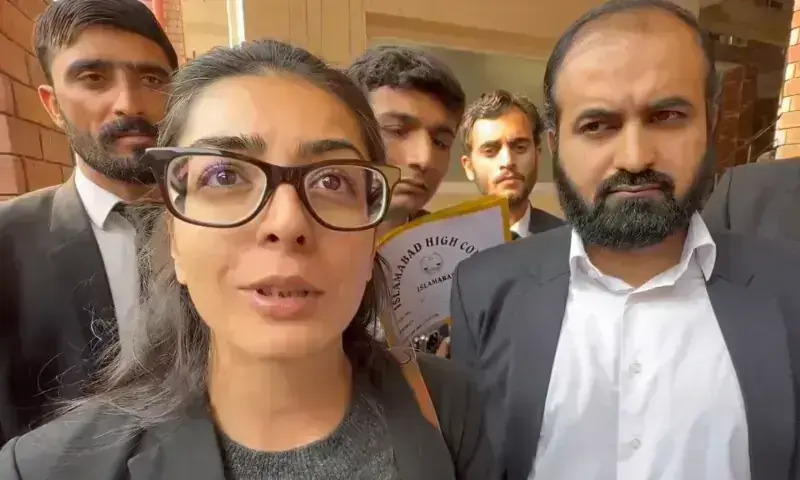
An anti-terrorism court (ATC) in Islamabad on Saturday escalated tensions between the judiciary and prison authorities by issuing a formal contempt of court notice to the superintendent of Adiala Jail. The punitive measure stems from the superintendent's alleged failure to facilitate the signing and transmission of essential powers of attorney, legally known as vakalatnamas, which are mandatory for filing bail petitions on behalf of prominent human rights lawyers Imaan Zainab Hazir-Mazari and Hadi Ali Chattha.
During the proceedings presided over by ATC Judge Tahir Abbas Sipra, the court directed the jail official to submit a comprehensive explanation regarding why he should not face a sentence of up to six months in prison for willful disobedience of judicial orders. The crisis originated on Tuesday when the court was forced to return the bail petitions filed by Mazari and Chattha in connection with the Kohsar police station protest case. The rejection was strictly procedural, resulting from the complete absence of duly signed powers of attorney that the applicants' legal team had sought to secure from within the correctional facility.
Adding to the judicial friction, no representative from the Adiala Jail administration deemed it appropriate to appear before the court to offer an explanation. Furthermore, the two accused individuals were once again not produced before the bench via video link, ignoring a direct and prior instruction issued by Judge Sipra.
Commercial & Economic Implications
While institutional standoffs between the judiciary and prison administrations primarily manifest as legal battles, they carry profound indirect ramifications for Pakistan's national risk profile, business sentiment, and economic stability. Foreign direct investment (FDI) and domestic commercial confidence are deeply contingent upon the perceived strength, predictability, and impartiality of the rule of law. When administrative friction hampers fundamental legal and judicial processes, it projects an image of bureaucratic inertia and institutional unpredictability to international trade partners and multilateral lending agencies.
For commercial enterprises operating within Pakistan, a stable legal framework is essential for contract enforcement and dispute resolution. Persistent friction within the criminal justice and correctional sectors can exacerbate domestic uncertainty, indirectly influencing sovereign risk ratings and dampening market enthusiasm across various sectors, including retail trade and wholesale distribution.
Related Intelligence: Inside the UN General Assembly: Global Diplomacy and Economic Realities
Stakeholder Perspectives & Market Reactions
Legal fraternities and civil society organizations have reacted strongly to the developments, expressing deep concern over what they characterize as administrative obstruction of legal access. Prominent defense counsels and bar associations have argued that denying detained individuals the basic right to execute legal documentation undermines constitutional guarantees and procedural fairness.
Human rights advocates and legal experts point out that the inability of lawyers to secure basic vakalatnamas inside state-run facilities sets an alarming precedent for access to justice. Meanwhile, government and prison authorities have faced mounting scrutiny from judicial quarters, with courts signaling zero tolerance for bureaucratic non-compliance and administrative delays in high-profile cases.
Forward Outlook & Key Watchpoints
As the case progresses, all eyes will be on the Adiala Jail superintendent's official response to the contempt notice. The upcoming hearings will test the judiciary's resolve in enforcing administrative accountability within Pakistan's overcrowded and tightly controlled prison system.
Key watchpoints for legal analysts and market observers include the formal submission of the jail administration's reply, the potential rescheduling and successful filing of the bail petitions for Imaan Zainab Hazir-Mazari and Hadi Ali Chattha, and any broader institutional reforms that might emerge to streamline communication between the judiciary and correctional facilities.
Join Our Official WhatsApp Channel
Receive live commodity alerts, policy changes, and commercial intelligence directly on WhatsApp.