
West Bank Escalation Threatens Regional Stability and Trade Flows
Escalating violence in the West Bank heightens geopolitical risks, threatening regional stability and key international trade routes.
Geopolitical & Core Developments
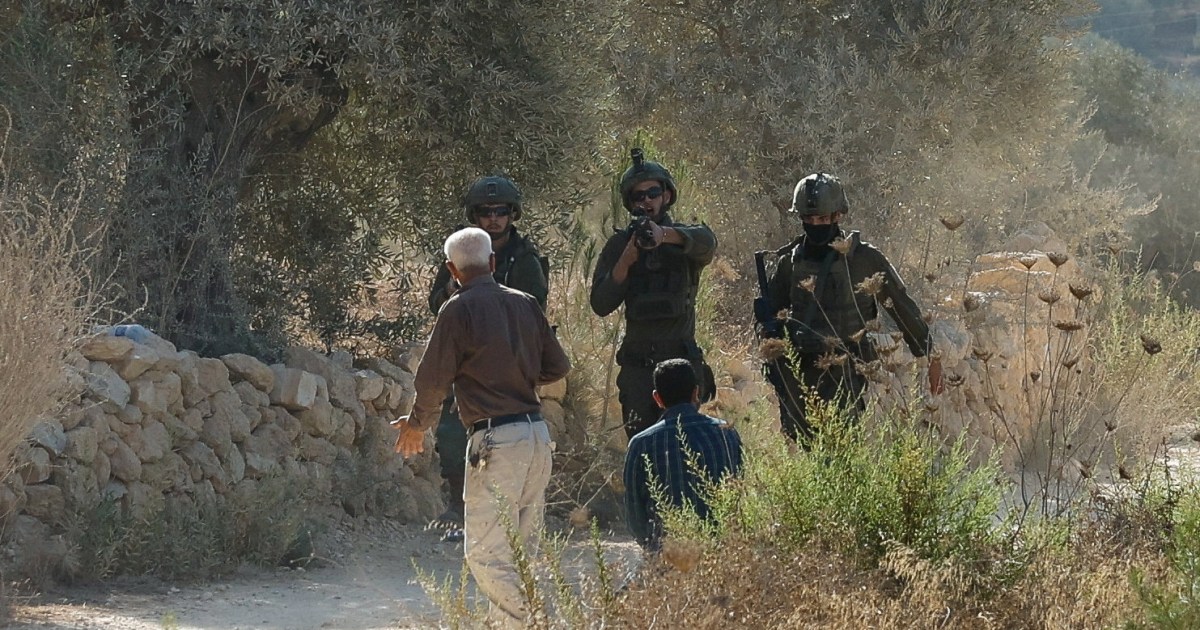
The recent surge of violence in the occupied West Bank, highlighted by coordinated settler attacks and subsequent military intervention against journalists in the Jabal Qamass area near Beita, underscores a dangerous deterioration in the security landscape. This latest flare-up is not an isolated local incident; rather, it forms part of a broader, compounding crisis that severely strains state actors, international diplomacy, and regional governance frameworks. As security forces detain and assault media personnel attempting to document field events, the flow of independent information is impeded, heightening diplomatic friction between regional governments and international human rights monitors.
Strategically, the persistent instability in the West Bank interacts directly with wider Middle Eastern fault lines, including ongoing conflicts involving regional proxies and state militaries. The absence of a viable political horizon accelerates institutional decay within the Palestinian territories, hardening positions on all sides. Diplomatic channels managed by Western and regional mediators face mounting paralysis as unilateral actions on the ground outpace multilateral conflict-resolution efforts. Consequently, state actors find themselves recalibrating defense postures and emergency diplomatic protocols to prevent localized skirmishes from cascading into a wider regional conflagration.
Global Trade & Economic Ripples
While the immediate theater of conflict remains localized to the West Bank and broader Levant, the economic ramifications extend outward into global commodity and financial markets. The Middle East remains a vital artery for international trade, energy production, and maritime logistics. Persistent insecurity in the region directly influences investor risk sentiment, driving up insurance premiums for maritime shipping traversing adjacent waters and elevating volatility across energy futures.
Commodity markets, particularly crude oil and natural gas benchmarks, remain acutely sensitive to any escalation that threatens to draw in major regional energy producers or disrupt vital logistical choke points such as the Suez Canal and Red Sea corridors. Supply chains dependent on predictable transit times face continuous readjustment as multinational corporations enact contingency routing to mitigate potential disruptions. Furthermore, currency markets frequently react to Middle Eastern escalations through a flight to safety, strengthening safe-haven currencies like the US dollar while exerting downward pressure on emerging market currencies and regional equities.
Related Intelligence: Houthi Red Sea Advance Triggers Fresh Humanitarian and Trade Crisis
International Reactions & Diplomatic Stances
The international community has expressed profound alarm over the deteriorating conditions in the West Bank, with multilateral bodies and foreign ministries issuing urgent appeals for restraint and accountability. The United Nations and various human rights organizations have condemned the targeting of journalists and civilians, emphasizing that freedom of the press and the protection of non-combatants are foundational tenets of international law.
Major economic powers and traditional diplomatic intermediaries have stepped up bilateral consultations to prevent further escalation. However, consensus on punitive or corrective measures remains elusive, constrained by deeply entrenched geopolitical alignments. Market analysts note that while immediate economic sanctions directly tied to these specific West Bank incidents are unlikely, the cumulative effect of sustained instability is prompting institutional investors to apply stricter risk discounts to assets exposed to the broader Middle East region.
Strategic Outlook & Future Scenarios
Looking ahead, the trajectory of the West Bank crisis points toward sustained volatility with limited prospects for comprehensive de-escalation in the near term. Upcoming diplomatic summits and ministerial meetings will likely focus on emergency humanitarian access and localized ceasefires, though foundational drivers of the conflict remain unaddressed.
Geopolitical escalation points to watch include potential spillover into neighboring states, intensification of civil unrest within the territories, and further friction between international press corps and state security apparatuses. For global corporations and commodity traders, navigating this environment requires robust risk management frameworks, continuous geopolitical monitoring, and agile supply chain strategies designed to withstand sudden shocks in one of the world's most critical economic corridors.
Join Our Official WhatsApp Channel
Receive live commodity alerts, policy changes, and commercial intelligence directly on WhatsApp.