
US Supreme Court Weighs Military Explosives Case in Guam
The US Supreme Court has begun hearing arguments regarding Air Force ordnance detonations in Guam, raising critical questions concerning environmental oversight and territorial rights.
Geopolitical & Core Developments
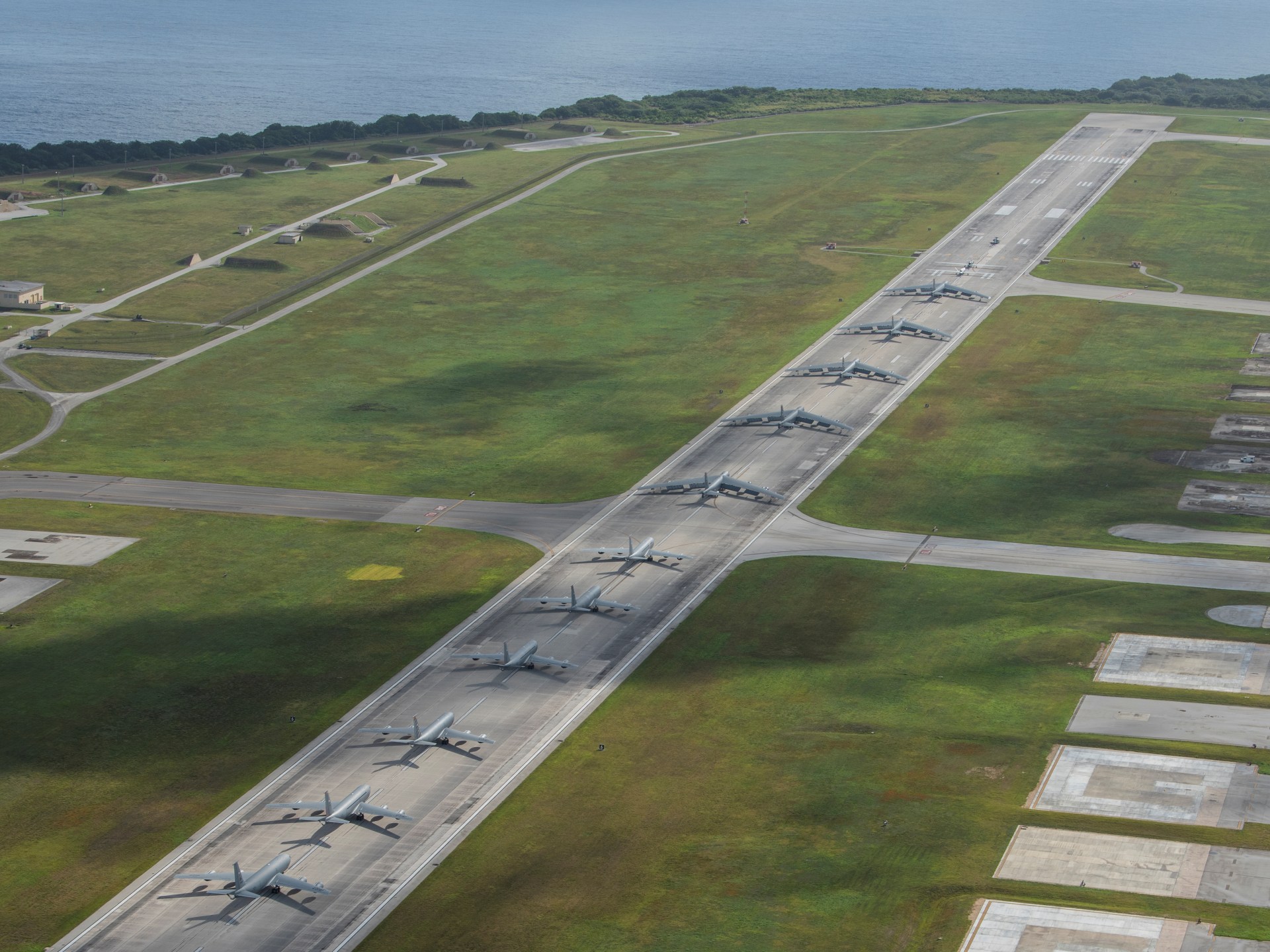
The United States Supreme Court has commenced proceedings on a high-stakes legal challenge concerning the United States Air Force's unexploded ordnance (UXO) detonations in the unincorporated territory of Guam. The litigation, brought forward by local advocacy organizations and indigenous representatives, centers on allegations that the Department of Defense systematically bypassed stringent environmental impact reviews mandated by federal law. At the heart of the legal dispute is the balance between national security imperatives in the strategically vital Indo-Pacific region and the statutory protections owed to local ecosystems and populations. Guam serves as a critical strategic hub for US military projections in Asia, hosting major installations like Andersen Air Force Base. As geopolitical tensions in the Taiwan Strait and the broader South China Sea persist, Washington has ramped up defense infrastructure and operational readiness across its Pacific territories. However, this military buildup has increasingly collided with local concerns over ecological degradation, cultural heritage preservation, and a perceived deficit in democratic self-determination for residents of US territories who lack voting representation in Congress.
Global Trade & Economic Ripples
While the immediate proceedings unfold in a constitutional and environmental framework, the implications extend to regional commercial stability, maritime logistics, and infrastructure development across the broader Oceania and Micronesia markets. Guam functions as a vital commercial transshipment node, energy import terminal, and telecommunications nexus for the Western Pacific. Heightened legal scrutiny and potential injunctions on military construction or testing activities could temporarily disrupt regional supply chains, contractor logistics, and procurement pipelines tied to the Indo-Pacific defense supply network. Commodity markets closely monitor Indo-Pacific security developments, as any operational bottlenecks or prolonged litigation can influence regional insurance premiums for maritime shipping and alter commercial real estate and construction dynamics within the territory. Furthermore, investor confidence in regional infrastructure projects remains sensitive to regulatory stability and the outcome of federal court interventions involving land and resource use by the sovereign power.
Related Intelligence: Khyber Pakhtunkhwa Chief Executive Rejects New Military Operations Amid Political March
International Reactions & Diplomatic Stances
International observers, regional Pacific Island forums, and human rights organizations are closely monitoring the Supreme Court proceedings as a litmus test for how metropolitan powers manage indigenous rights and environmental obligations in non-self-governing territories. While the United Nations Special Committee on Decolonization frequently highlights the political status of territories like Guam, American Samoa, and the US Virgin Islands, the current judicial review brings domestic constitutional law into direct alignment with international standards on indigenous consultation and environmental justice. Legal analysts suggest that a ruling favoring the advocacy groups could set a profound precedent, potentially compelling the federal government to subject strategic military expansions in overseas territories to more rigorous judicial and public oversight. Conversely, a ruling upholding the military's exemption or discretionary authority would reinforce executive primacy in national security matters, drawing criticism from international civil society groups concerned about democratic accountability.
Strategic Outlook & Future Scenarios
As the Supreme Court weighs its decision, expected later in the term, the trajectory of US military strategy in the Western Pacific hangs in the balance. A decision requiring enhanced environmental compliance could introduce procedural delays into ongoing force-posture initiatives, forcing the Pentagon to recalibrate construction timelines for hardening bases against potential regional contingencies. Conversely, expedited clearance for military operations would reassure defense contractors and allied partners of Washington's unwavering commitment to maintaining a robust deterrent posture in the First Island Chain. Beyond the courtroom, the case has galvanized local political movements advocating for greater self-governance and permanent consultation mechanisms regarding federal land withdrawals. Ultimately, the Guam UXO litigation highlights the complex interplay between hegemonic security strategy, domestic administrative law, and the fundamental rights of territorial populations in an increasingly contested global security environment.
Join Our Official WhatsApp Channel
Receive live commodity alerts, policy changes, and commercial intelligence directly on WhatsApp.