
UK Military Chief Declares Space a New Warfighting Frontier
The UK Royal Air Force has designated space as a critical warfighting domain, launching a specialized satellite defense squadron amid rising global tensions and weaponization concerns.
The Core Development
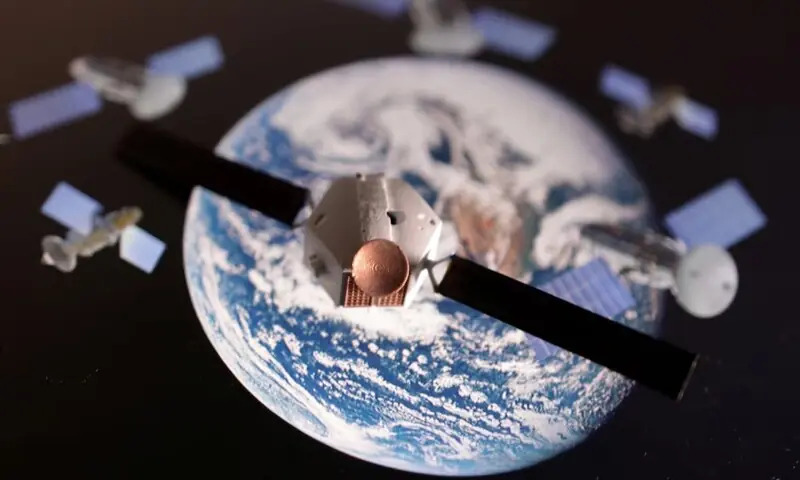
Space has officially transitioned into a contested warfighting domain, according to a stark warning delivered by the United Kingdom's top air force commander on Wednesday. Air Chief Marshal Harv Smyth, head of the Royal Air Force (RAF) since August 2025, announced the creation of a specialized new military squadron charged explicitly with defending British orbital assets and satellites. This strategic initiative underscores a rapid acceleration in military space capabilities among global powers as geopolitical competition spills beyond Earth's atmosphere.
The announcement arrives just over a week after the United States publicly confirmed for the first time that it maintains operational weapons deployed in Earth orbit. This unprecedented disclosure has sharply escalated international fears regarding an uncontrolled arms race in outer space. In response to these developments, Beijing strongly cautioned against turning outer space into a military battlefield, while Moscow emphasized the critical necessity of keeping orbital pathways entirely free from any weaponry.
Air Chief Marshal Smyth asserted during his briefing that Western allies are confronting an increasingly volatile environment marked by provocative maneuvers from adversarial states. The establishment of the new RAF squadron represents a direct institutional pivot by the United Kingdom to safeguard critical orbital infrastructure upon which modern military command, global communications, and financial networks depend.
Commercial & Economic Implications
For emerging economies and trading nations like Pakistan, the militarization of space carries profound, albeit indirect, commercial and economic ramifications. Modern international trade, wholesale distribution, and global supply chains rely extensively on uninterrupted satellite communications, precise GPS navigation, and synchronized financial data networks. Any escalation of hostilities or kinetic conflict in orbit introduces catastrophic systemic risks to global commerce.
A disruption of orbital assets by hostile actors could instantly paralyze international shipping lanes, paralyze aviation logistics, and cause severe volatility in global commodity markets. For Pakistani importers, exporters, and domestic retail supply chains, heightened geopolitical instability in space translates into elevated insurance premiums for maritime logistics, heightened risk premiums on international trade finance, and potential vulnerability in telecommunications infrastructure. Furthermore, the diversion of advanced technological resources toward military space programs in Western and Asian economies could restrict the global availability of critical semiconductor components and specialized aerospace materials, indirectly impacting domestic industrial modernization.
Related Intelligence: UK Social Fractures Threaten Investor Confidence and Domestic Stability
Stakeholder Perspectives & Market Reactions
International defense analysts, aerospace industry bodies, and global technology conglomerates have expressed deep concern over the accelerating pace of space weaponization. Commercial satellite operators, who share orbital space with an increasing number of classified military payloads, have warned of heightened collision risks and electronic interference. Legal experts in international space law emphasize that the 1967 Outer Space Treaty is currently under severe strain, lacking robust enforcement mechanisms to deter the deployment of offensive orbital armaments.
Trader associations and business councils in South Asia are closely monitoring how major power rivalries impact global macroeconomic stability. While domestic markets in Pakistan remain insulated from direct defense expenditures in the space sector, financial institutions are increasingly factoring geopolitical technology risks into their long-term foreign trade and currency forecasts. The general consensus among economic observers is that an unchecked space arms race will introduce systemic volatility into global capital markets, affecting everything from energy pricing to cross-border logistics.
Forward Outlook & Key Watchpoints
As the United Kingdom operationalizes its new satellite defense squadron, international policymakers are shifting their focus to upcoming multilateral forums addressing orbital security. Key watchpoints include the United Nations Committee on the Peaceful Uses of Outer Space (COPUOS) sessions, where Western and Eastern blocs are expected to clash over regulatory frameworks for orbital weapon deployments.
Analysts will closely monitor whether the United States, China, Russia, and European allies can establish new arms control treaties specifically tailored to space, or if the domain will experience a continuation of rapid militarization throughout late 2025 and 2026. For global businesses and strategic planners, the primary imperative will be enhancing the resilience of satellite-dependent networks against potential electronic warfare, jamming, and anti-satellite threats.
Join Our Official WhatsApp Channel
Receive live commodity alerts, policy changes, and commercial intelligence directly on WhatsApp.