
Tata Sons Leadership Discord Sparks Global Market and Regulatory Concerns
Internal tensions over leadership reappointment and mandatory public listing directives have placed Tata Sons under intense scrutiny, threatening operational continuity across its vast international industrial footprint.
Geopolitical & Core Developments
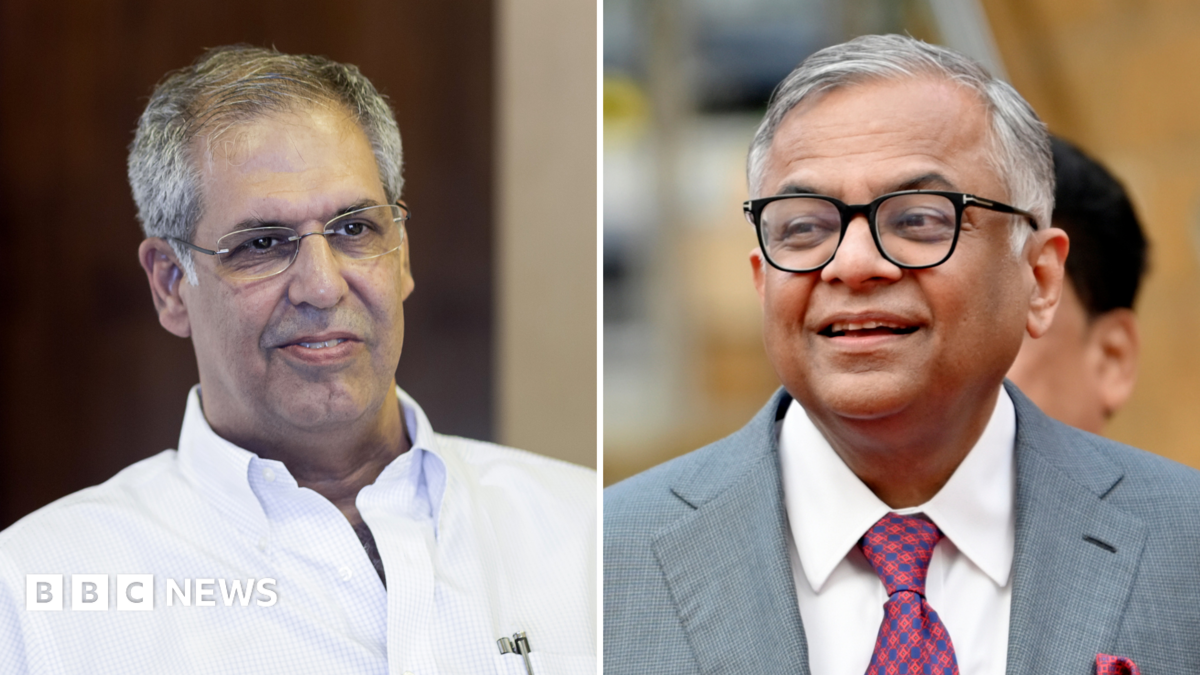
The deepening governance dispute within Tata Sons, the primary holding entity of India's preeminent 365 billion dollar conglomerate, has ignited international financial concern over corporate stability and regulatory compliance. At the center of the discord lies friction regarding the reappointment terms of executive leadership and an impending regulatory mandate from the Reserve Bank of India (RBI). Under the central bank's Scale-Based Regulation for Upper Layer Non-Banking Financial Companies (NBFC-UL), Tata Sons is obligated to conduct an initial public offering to dilute concentrated institutional holdings and enhance public disclosure.
The strategic stakes are exceptionally high. Approximately 66 percent of Tata Sons' equity is controlled by philanthropic trusts, historically chaired by the late Ratan Tata, creating an intricate balance between charitable ownership and commercial operations. Boardroom deliberations have grown increasingly polarized over whether to pursue structural reorganization to evade public listing status or execute what would be India's largest-ever initial public offering. This internal division revives memories of the protracted 2016 corporate confrontation, raising fresh questions regarding board transparency, executive autonomy, and sovereign corporate governance in Asia's third-largest economy.
Global Trade & Economic Ripples
The reverberations of instability at Tata Sons extend far beyond domestic financial markets, intersecting directly with critical global supply chains, international manufacturing, and strategic technology investments. Through its subsidiaries, the conglomerate operates foundational industrial assets worldwide, most notably Jaguar Land Rover (JLR) in the United Kingdom, extensive steel manufacturing facilities across Western Europe, and Tata Consultancy Services (TCS), a linchpin of cross-border enterprise IT infrastructure.
In the United Kingdom, the group remains central to bilateral trade corridors, navigating a state-backed 500-million-pound green transition at its Port Talbot steelworks in Wales alongside a 4-billion-pound electric vehicle gigafactory in Somerset. Simultaneously, Tata's aviation arm, Air India, is executing one of commercial aviation's most aggressive fleet modernization programs, involving historic commercial aircraft acquisitions split between Boeing and Airbus. In advanced manufacturing, the group has committed 11 billion dollars toward establishing India's inaugural commercial semiconductor fabrication plant in Dholera, Gujarat, in partnership with Taiwan's Powerchip Semiconductor Manufacturing Corporation (PSMC). Disruptions at the apex holding company threaten capital allocation models, credit ratings, and project execution timelines across these sensitive multinational ventures.
Related Intelligence: Transatlantic Cultural Tourism Drives Rural Economic Resilience Across Western Ireland
International Reactions & Diplomatic Stances
Global credit rating agencies, including Moody's and S&P Global, have emphasized the necessity of maintaining robust corporate firewalls between Tata Sons and its debt-issuing operational entities. Analysts note that while operating subsidiaries maintain independent balance sheets, extended holding-company turbulence could widen borrowing spreads on international debt markets. Institutional investors across London, New York, and Singapore have signaled that long-delayed clarity regarding the RBI listing deadline is critical for pricing broader Indian emerging-market equity risk premia.
Government officials in partner nations, particularly within the British Department for Business and Trade, are monitoring developments closely to ensure capital continuity for strategic decarbonization and manufacturing projects. Multilateral corporate governance monitors have framed the situation as a critical test case for how hereditary and trust-managed conglomerates in emerging economies adapt to modern regulatory oversight, fiduciary transparency, and international minority-investor standards.
Strategic Outlook & Future Scenarios
The trajectory of Tata Sons hinges on two plausible scenarios in the coming quarters. In the primary scenario, the board reaches consensus on corporate restructuring, potentially spinning off non-core finance activities or retiring external debt to seek formal deregulation from the central bank's upper-layer category, thereby averting a mandatory public float. This approach would preserve private holding-company discretion but could invite protracted regulatory scrutiny.
Conversely, compliance with the public listing mandate would compel Tata Sons to open its books to international institutional capital, permanently shifting the dynamic between the controlling philanthropic trusts and external public shareholders. As India seeks to solidify its position as an indispensable alternative hub in global supply chains, the outcome of this corporate upheaval will directly influence global investor sentiment toward Indian sovereign economic governance.
Join Our Official WhatsApp Channel
Receive live commodity alerts, policy changes, and commercial intelligence directly on WhatsApp.