
Security Forces Eliminate 19 Terrorists in Balochistan Operations
Nineteen terrorists were killed and one soldier was martyred during sustained intelligence-led operations across Balochistan, underscoring intensified efforts to secure critical regional infrastructure.
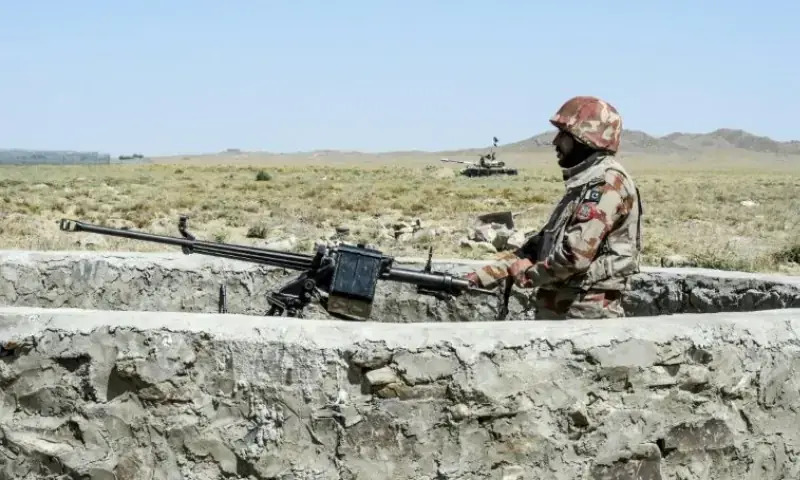
The Core Development
Security forces in Pakistan executed a series of high-intensity, intelligence-driven operations across Balochistan, resulting in the elimination of 19 terrorists and the martyrdom of one soldier. According to the Inter-Services Public Relations (ISPR), the military's media wing, the operations commenced following actionable intelligence regarding the presence of multiple militant hideouts in the Shaban area of Quetta district. These hideouts were reportedly established by elements designated by the state as Fitna al Khawarij and Fitna al Hindustan, entities accused of orchestrating subversive activities and posing an imminent threat to local civilian populations.
The clearance operations began on September 21, designed to systematically dismantle militant infrastructure, recover hidden caches of arms and ammunition, and secure vital communication arteries. During intense exchanges of fire, security personnel demonstrated tactical precision to minimize civilian displacement while neutralizing heavily armed combatants. The sacrifice of the soldier highlights the severe risks faced by front-line personnel operating in rugged, mountainous terrain where hostile networks frequently seek refuge.
Commercial & Economic Implications
Balochistan serves as a critical nexus for Pakistan's national commerce, energy corridors, and major infrastructure projects, including key segments of the China-Pakistan Economic Corridor (CPEC). Sustained security instability directly disrupts wholesale distribution networks, agricultural supply chains, and mineral extraction ventures across the province. Persistent militant threats impose severe risk premiums on freight logistics, inflating transportation costs for commercial enterprises moving goods between major urban centers and regional markets.
Restoring absolute writ of the state in volatile districts like Quetta is a fundamental prerequisite for attracting foreign direct investment and domestic capital into mining, energy, and retail sectors. When security operations successfully neutralize hostile networks, commercial confidence rebounds, safeguarding retail trade against extortion, supply blockades, and transport delays. Consequently, aggressive counter-terrorism measures act as an economic stabilizer, protecting national inflation targets by ensuring uninterrupted movement of commercial freight and stabilizing consumer prices.
Related Intelligence: Ethiopian Rebel Alliance Threatens Stability and Regional Trade
Stakeholder Perspectives & Market Reactions
Business councils, trader associations, and industrial chambers across Balochistan and major financial hubs have expressed unwavering solidarity with the security apparatus. Representatives from various commercial bodies noted that enduring peace is the cornerstone of sustainable retail growth and wholesale expansion. Business leaders emphasized that targeted clearance operations reassure investors, mitigating the financial fallout associated with security-related disruptions.
Legal experts and defense analysts have similarly underscored the necessity of robust state action against foreign-backed subversion. Official statements from government and military leadership reiterate an unyielding resolve to eradicate terrorism in all its manifestations. Authorities have stressed that safeguarding national economic corridors from hostile interference remains a non-negotiable priority, vital for securing the long-term prosperity of the region and the country at large.
Forward Outlook & Key Watchpoints
As security forces press forward with consolidation and sanitization protocols in the Shaban sector and surrounding districts, federal and provincial agencies are slated to intensify intelligence-sharing mechanisms. Key watchpoints for the upcoming quarters include the implementation of enhanced border management systems, increased surveillance along commercial transit routes, and the acceleration of socioeconomic development initiatives aimed at integrating marginalized districts.
Policy enforcement will increasingly focus on disrupting financial pipelines supporting militant outfits while reinforcing protective measures around vital energy and transport infrastructure. The sustained success of these comprehensive security frameworks will dictate the trajectory of regional trade, investor sentiment, and economic resilience throughout Pakistan.
Join Our Official WhatsApp Channel
Receive live commodity alerts, policy changes, and commercial intelligence directly on WhatsApp.