
Pakistan Urges Rapid Implementation of US-Iran Memorandum in Tehran Talks
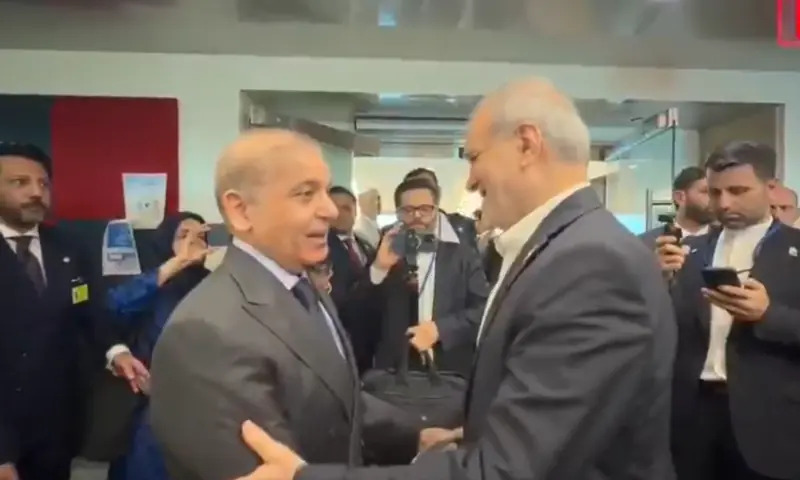
Prime Minister Shehbaz Sharif met with Iranian President Masoud Pezeshkian to stress the urgent implementation of the Islamabad MoU, aiming to resolve ongoing US-Iran maritime tensions.
The Core Development
Prime Minister Shehbaz Sharif held high-level discussions with Iranian President Masoud Pezeshkian on Thursday, placing renewed emphasis on the immediate enforcement of the Islamabad Memorandum of Understanding. The 14-point interim agreement, brokered and signed in Islamabad in June, serves as a diplomatic framework aimed at de-escalating the prolonged confrontation between the United States and Iran. Pakistan acted as a crucial mediator in structuring the pact, which envisions a synchronized roadmap including the immediate lifting of the US naval blockade on Iranian ports and the simultaneous reopening of traffic through the strategic Strait of Hormuz.
Despite the signing of the electronic accord, the geopolitical reality on the ground remains volatile. Sporadic military strikes continue to disrupt stability, while the US naval blockade persists in restricting normal Iranian maritime operations. Concurrently, Tehran has maintained strict regulatory control over vessel traffic passing through the critical global energy chokepoint, keeping international energy markets and regional stakeholders on high alert.
Commercial & Economic Implications
For Pakistan's domestic economy, the prolonged friction in the Persian Gulf carries severe ramifications for wholesale distribution, retail trade, and inflationary pressures. The disruption of normal shipping lanes through the Strait of Hormuz directly threatens petroleum imports and vital supply chains linking South Asia with the Middle East. Any prolonged blockade translates into volatile energy costs, compounding manufacturing overheads and accelerating inflationary trends across consumer markets in Pakistan.
Kalyar Traders and domestic business chambers note that freight rates and marine insurance premiums for regional trade routes have experienced sharp fluctuations. Small and medium enterprises dependent on imported raw materials face margin compression as logistics costs surge. A successful enforcement of the Islamabad MoU would immediately stabilize regional freight corridors, lower import bills for essential commodities, and provide much-needed relief to Pakistan's external account balance.
Related Intelligence: Pakistan Urges Rapid Implementation of US-Iran Accord to Stabilize Trade
Stakeholder Perspectives & Market Reactions
Business councils and trade associations in Pakistan have expressed cautious optimism regarding Islamabad's proactive diplomatic stance. Industry representatives emphasize that Pakistan's credibility as a regional mediator hinges on the tangible progress of the 14-point framework. Financial analysts point out that lowering Gulf tensions is a prerequisite for stabilizing global commodity prices, which directly dictate domestic fiscal health.
Official circles in Islamabad maintain that regional integration and unhindered maritime commerce remain cornerstones of Pakistan's foreign economic policy. Legal and trade experts have underscored that durable peace in the Strait of Hormuz will require strict adherence to the electronic commitments made by Washington and Tehran under Pakistani mediation, shielding developing economies from collateral market shocks.
Forward Outlook & Key Watchpoints
As diplomatic channels remain active, the coming weeks will prove critical in determining whether the Islamabad MoU transitions from a preliminary framework into enforceable policy. Key watchpoints include the resumption of unmonitored commercial shipping through the Strait of Hormuz, phased drawdowns of naval restrictions by the United States, and formal verification mechanisms established by Islamabad.
For Pakistani policymakers and business leaders, monitoring these milestones is essential for long-term strategic planning. Failure to enforce the agreement risks cementing prolonged supply chain bottlenecks, whereas successful implementation could herald a new era of regional trade stability and economic cooperation.
Join Our Official WhatsApp Channel
Receive live commodity alerts, policy changes, and commercial intelligence directly on WhatsApp.