
Pakistan Urges Rapid Implementation of US-Iran Accord to Stabilize Trade
Prime Minister Shehbaz Sharif urged Iranian President Masoud Pezeshkian to implement the Islamabad MoU to end the US-Iran conflict and secure regional trade routes.
The Core Development
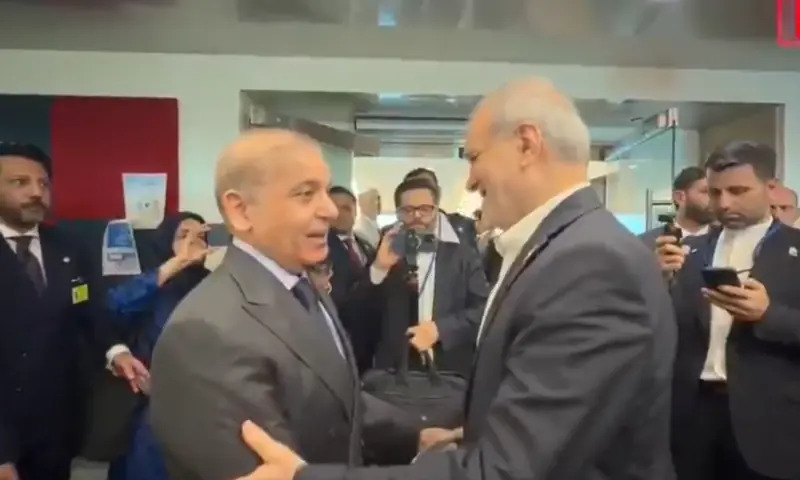
Prime Minister Shehbaz Sharif held high-level diplomatic talks with Iranian President Masoud Pezeshkian on Thursday, centering discussions on the immediate and unconditional implementation of the Islamabad Memorandum of Understanding (MoU). The 14-point interim agreement, initially brokered and signed in June with Pakistan acting as a pivotal mediator, outlines a comprehensive framework designed to de-escalate hostilities between the United States and Iran.
Despite the diplomatic breakthrough achieved in Islamabad earlier this year, the conflict has persisted through sporadic military exchanges and an ongoing US naval blockade targeting Iranian ports. In response, Tehran has maintained strict regulatory control over maritime traffic passing through the strategic Strait of Hormuz. During Thursday's bilateral meeting, Prime Minister Shehbaz expressed profound concern over the protracted nature of the hostilities, emphasizing the critical necessity for military restraint, active de-escalation, and sustained diplomatic engagement to secure permanent regional stability.
Commercial & Economic Implications
For Pakistan's domestic economy, the protracted US-Iran impasse carries severe commercial ramifications. The Strait of Hormuz serves as a vital artery for global energy shipments and regional commerce. Continued blockades and maritime friction directly threaten Pakistan's petroleum supply chains, driving up energy import costs and exerting severe upward pressure on domestic inflation.
Wholesale distribution networks, manufacturing sectors, and retail trade associations across Pakistan are highly vulnerable to energy price volatility resulting from Middle Eastern instability. A failure to operationalize the Islamabad MoU risks exacerbating trade deficits, inflating transportation expenditures, and destabilizing local consumer markets as businesses absorb higher operational overheads.
Related Intelligence: Israeli Gaza Documentary NAZA Set for Global Free Streaming Release
Stakeholder Perspectives & Market Reactions
Industrial bodies and major trader associations in Pakistan have voiced mounting anxiety over the prolonged maritime standoff. Business leaders note that prolonged trade bottlenecks severely constrain export competitiveness, particularly for agricultural goods and perishable commodities destined for Middle Eastern markets.
Legal and foreign policy analysts view Pakistan's mediation role as a high-stakes diplomatic test. While official statements from Islamabad continue to advocate for peaceful dialogue and adherence to international maritime law, market stakeholders demand tangible policy assurances to protect domestic commerce from external geopolitical shocks.
Forward Outlook & Key Watchpoints
Looking ahead, the primary diplomatic objective remains securing verifiable compliance from both Washington and Tehran regarding the 14-point framework. Key watchpoints include the complete lifting of naval blockades, the permanent reopening of regional shipping lanes, and the normalization of trade protocols through the Strait of Hormuz.
Policymakers in Islamabad must closely monitor international compliance timelines to safeguard Pakistan's strategic economic interests. Failure to enforce the terms of the Islamabad MoU could trigger renewed energy shortages, necessitating emergency fiscal interventions by financial authorities.
Join Our Official WhatsApp Channel
Receive live commodity alerts, policy changes, and commercial intelligence directly on WhatsApp.