
Pakistan Secures Asian Games Squash Medals After Semifinal Breakthrough
Pakistan secured medals at the Asian Games as squash players Noor Zaman and Mohammad Ashab Irfan advanced to the semi-finals, guaranteeing at least a bronze.
The Core Development
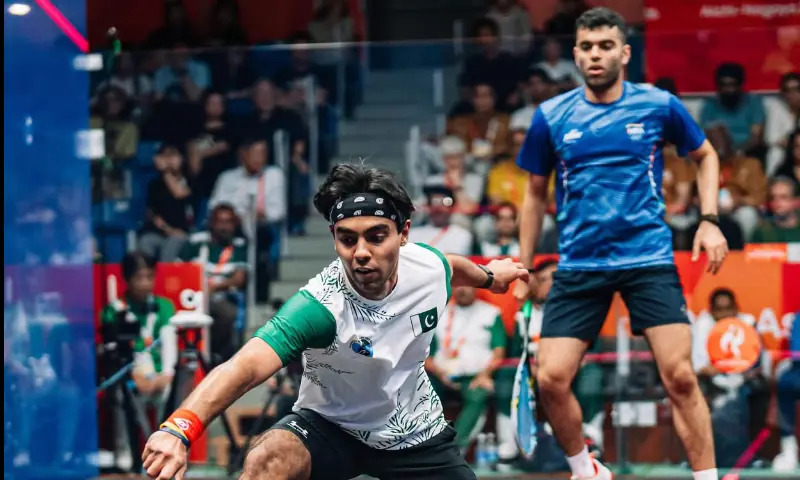
Pakistan's athletic contingent at the Asian Games achieved a significant milestone on Friday as squash contenders Noor Zaman and Mohammad Ashab Irfan delivered commanding performances to secure their places in the tournament's semi-finals. Competing at the Nagoya Kinjo Futo Arena, the two rising stars navigated high-pressure encounters against formidable regional opponents to guarantee Pakistan of at least a bronze medal in the men's singles squash competition.
Noor Zaman, carrying the mantle as Pakistan's highest-ranked player in the tournament draw as the third seed, faced a rigorous challenge from Hong Kong's Chi Hin Henry Leung. Despite being pushed deep into tactical exchanges by his opponent, Noor maintained his composure during critical junctures to seal the victory. Meanwhile, fifth-seeded Mohammad Ashab Irfan demonstrated immense tactical flexibility and physical resilience against India's fourth-seeded Veer Chotrani. After dropping a tightly contested opening game, Ashab engineered a comprehensive turnaround, taking the next three games to secure a 3-1 victory (6-11, 11-8, 11-6, 11-6). This win not only propelled him into the last four but also served as a measure of redemption, avenging Pakistan's previous defeat to India in the men's team final at the prior Asian Games.
Commercial & Economic Implications
While sporting triumphs primarily elevate national prestige, high-profile international victories carry notable downstream economic and commercial implications for Pakistan's domestic sports economy and corporate sponsorship landscape. Success at major continental events such as the Asian Games directly influences sports-related retail trade, athletic equipment distribution, and commercial brand investments. Increased visibility for squash generates renewed consumer interest in racquet sports, driving retail sales for specialized athletic gear and bolstering revenue streams for local sporting goods distributors and wholesale suppliers.
Furthermore, consistent international podium finishes attract corporate sponsorship and private sector backing, which are vital for sustaining professional training infrastructure. In a developing market where sports financing heavily relies on institutional patronage, major victories help unlock vital corporate funding, ultimately reducing the fiscal burden on national sports boards and fostering a more self-sustaining commercial ecosystem for elite athletes.
Related Intelligence: African Nations Open AFCON Campaign Amid Rising Continental Sports Economy
Stakeholder Perspectives & Market Reactions
Following the qualification of Noor and Ashab, sports administrators, trader associations in the commercial goods sector, and public commentators expressed widespread optimism regarding the revival of Pakistan's traditional dominance in squash. Officials from the Pakistan Squash Federation underscored the strategic importance of sustained grassroots investment and institutional backing to maintain international competitiveness.
Industry bodies representing sports equipment retailers noted an immediate surge in public enthusiasm, anticipating increased consumer footfall across major commercial hubs in Lahore, Karachi, and Islamabad. Public response across national digital platforms has been overwhelmingly positive, with financial analysts and civic leaders emphasizing that athletic excellence serves as a powerful catalyst for national morale and international brand positioning.
Forward Outlook & Key Watchpoints
Attention now shifts to the high-stakes semi-final fixtures at the Nagoya Kinjo Futo Arena, where Noor and Ashab will contend for a place in the ultimate gold medal match. Sports policy makers and national federations are closely monitoring these developments to evaluate the efficacy of current training frameworks and resource allocation.
Key watchpoints for stakeholders include the potential announcement of federal and corporate cash incentives for the medalists, long-term talent pipeline funding, and structural reforms within national sports bodies to ensure continuous talent cultivation leading up to upcoming international championships.
Join Our Official WhatsApp Channel
Receive live commodity alerts, policy changes, and commercial intelligence directly on WhatsApp.