
Pakistan Initiates Repatriation of Sailors Killed in Somali Pirate Raid
The Prime Minister Office has initiated repatriation arrangements for three Pakistani sailors killed during a maritime rescue operation off Somalia, highlighting ongoing vulnerabilities in international shipping routes.
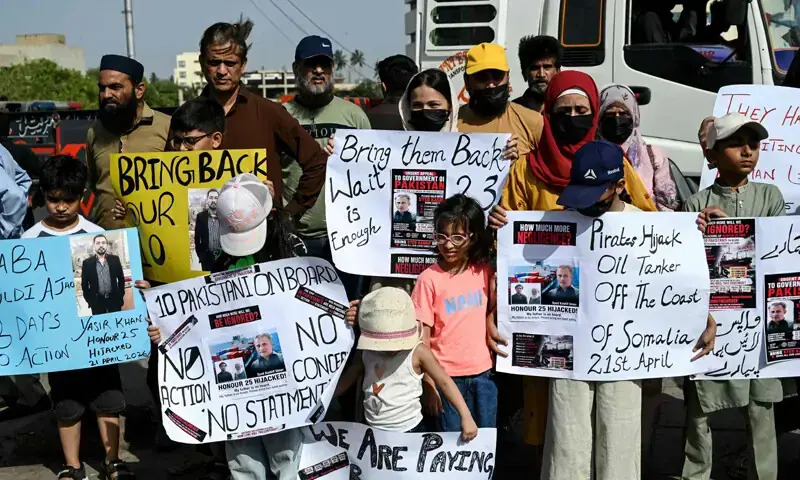
The Core Development
The Prime Minister Office (PMO) announced on Saturday that comprehensive administrative and logistical arrangements are actively underway to repatriate the remains of three Pakistani sailors. These crew members tragically lost their lives during a high-stakes operation earlier in the week aimed at recovering a hijacked oil tanker off the volatile coast of Somalia. The incident unfolded when the maritime police force of Somalia is semi-autonomous Puntland region intervened to secure the MT Honour 25, a Palau-flagged oil tanker. The vessel was carrying 19 crew members at the time of the assault, a contingent that notably included 10 Pakistani nationals.
Following the rescue operation, the Ministry of Foreign Affairs officially confirmed on Wednesday that three Pakistani nationals had succumbed to injuries sustained during the exchange, while three additional crew members sustained varying degrees of wounds. The deceased were subsequently identified by state authorities as Rafiullah Khan, Syed Kashif Umer, and Mahmood Ahmed Ansari. In response to the tragedy, the PMO issued a formal directive on Saturday mandating immediate diplomatic engagement with Somali authorities and commercial shipping agents to fast-track the return of the fallen sailors to their grieving families with full state honors.
Commercial & Economic Implications
While the human cost remains the paramount concern, incidents of this magnitude carry profound commercial and economic implications for Pakistan is import-dependent energy supply chains and maritime trade sector. The Arabian Sea and the Gulf of Aden corridors are critical arteries for petroleum, oil, and lubricants (POL) imports, as well as general dry-bulk cargo destined for Pakistani ports. Escalating piracy and maritime insecurity directly inflate freight insurance premiums, war-risk surcharges, and charter rates for vessel operators traversing the Horn of Africa.
For domestic markets in Pakistan, these heightened logistics costs invariably filter down through wholesale distribution channels, exerting upward pressure on retail fuel prices, industrial input costs, and broader consumer inflation. When international shipping lines face elevated security threats, voyage times lengthen and operational expenditures surge, threatening profit margins across the manufacturing and retail sectors. Kalyar Traders notes that safeguarding maritime trade routes is not merely a defense priority, but an indispensable prerequisite for macroeconomic stability, predictable supply chain management, and price containment in domestic retail markets.
Related Intelligence: Kyiv-Moscow Strikes Escalation Hits Critical Infrastructure and Trade Routes
Stakeholder Perspectives & Market Reactions
Industry bodies, merchant navy associations, and labor unions have expressed profound grief alongside mounting concern regarding the safety protocols governing Pakistani seafarers employed on foreign-flagged vessels. Representative bodies of Pakistani merchant navy officers have called upon the Ministry of Maritime Affairs and the Directorate General of Ports and Shipping to institute stricter compliance audits regarding hazard pay, security vetting, and emergency evacuation protocols for crews operating in high-risk High-Risk Areas (HRAs).
Legal experts specializing in international maritime law have emphasized the necessity of bilateral security frameworks between Islamabad and regional East African authorities to ensure rapid consular access and legal protection for Pakistani nationals working in international waters. Meanwhile, official statements from the Foreign Office reaffirmed Pakistan commitment to protecting its diaspora and workforce abroad, stressing that continuous intelligence sharing with international coalition forces operating under Combined Task Force (CTF) mandates must be prioritized to deter maritime banditry.
Forward Outlook & Key Watchpoints
The immediate operational focus remains centered on the seamless repatriation of the deceased sailors and the medical rehabilitation of the three injured survivors currently receiving care. Looking ahead, maritime security analysts and economic observers are closely monitoring several critical policy vectors. Key watchpoints include potential revisions to the deployment policies of Pakistani nationals on commercial tankers navigating East African waters, the implementation of enhanced onboard security hardening measures, and prospective diplomatic agreements between Pakistan and regional Somali administrations to secure maritime lanes.
Furthermore, industry stakeholders will evaluate whether international naval patrols are adequately expanded to counteract the resurgence of Somali piracy syndicates operating off the Puntland and central Somali coasts. Failure to suppress these maritime threats could result in prolonged shipping delays, higher landed costs for essential commodities, and sustained volatility across Pakistan commercial import channels in the upcoming fiscal quarters.
Join Our Official WhatsApp Channel
Receive live commodity alerts, policy changes, and commercial intelligence directly on WhatsApp.