
Obama Challenges Rise of Global Extremism Amid Shifting International Order
Addressing a major international arena, former US President Barack Obama rejected the inevitability of political extremism, urging renewed democratic resilience amid rising global geopolitical friction and market fragmentation.
Geopolitical & Core Developments
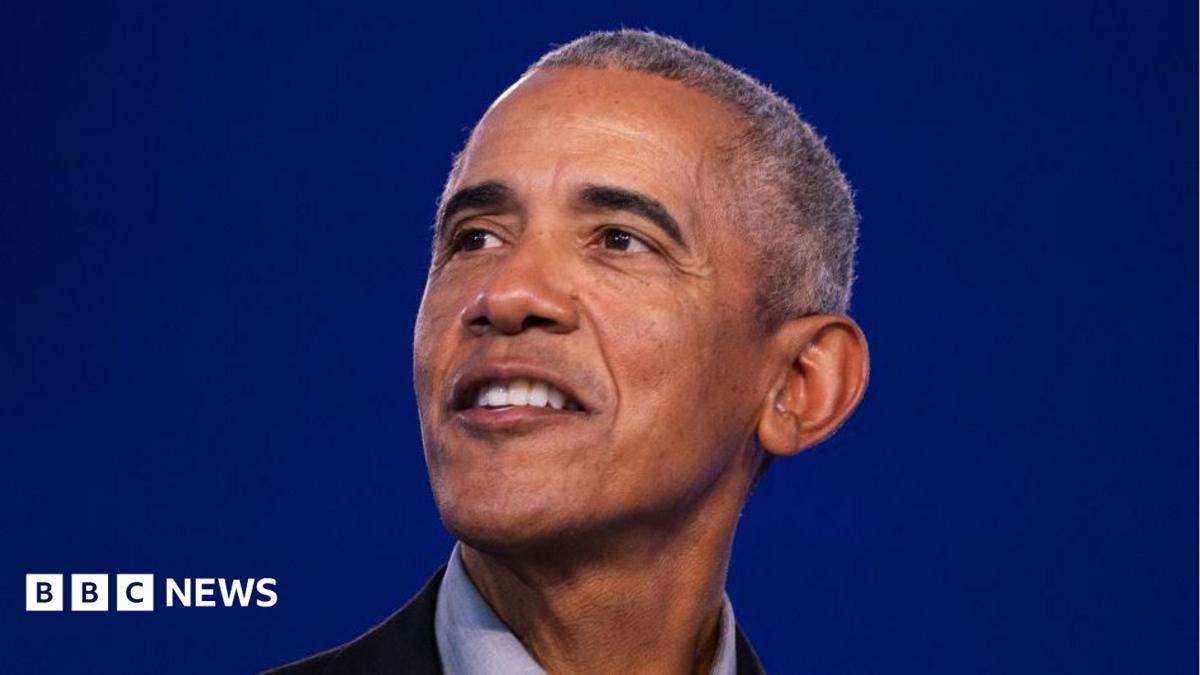
Addressing an audience exceeding 12,000 attendees during a major international forum, former United States President Barack Obama delivered an extensive appraisal of the systemic fractures confronting the international order. Central to his address was the contention that the contemporary drift toward political polarization, authoritarianism, and ideological extremism is neither historically predetermined nor insurmountable. Obama emphasized that institutional erosion stems from deliberate political calculations, systemic socio-economic grievances, and technological disruption rather than unalterable structural dynamics.
The intervention arrives at a precarious juncture for Western democracies and global governance architectures. Across multiple continents, electoral cycles are increasingly contested along populist and illiberal vectors, undermining historical policy consensus. As established democratic powers face internal socio-political fragmentation, external revisionist powers have sought to leverage these internal fault lines to alter regional spheres of influence. Obama's critique highlighted that the weakening of core civic institutions and the proliferation of algorithmic disinformation are eroding the foundational trust necessary to maintain stable domestic governance and cohesive international coalitions.
Global Trade & Economic Ripples
While predominantly framed around civic and institutional dynamics, the structural drift toward extremism carries severe ramifications for international commerce, global energy networks, and cross-border capital allocations. Prolonged ideological volatility within key market economies invariably translates into sovereign risk premiums, complicating long-term capital expenditure in critical infrastructure and extractive sectors. Multinationals are increasingly incorporating domestic political instability and regulatory volatility into their counterparty risk models.
Furthermore, the ideological pivot toward economic nationalism—frequently accompanying political extremism—continues to fracture multilateral trade disciplines. Tariffs, unilateral trade remedies, and sovereign investment restrictions are increasingly weaponized, destabilizing international supply chains. Key commodity corridors, particularly in strategic minerals and agricultural staples, remain acutely vulnerable to populist export prohibitions and protectionist policies. For shipping networks and energy transit routes, political radicalization in coastal or transit states heightens maritime security risks, inflating hull insurance rates and disrupting freight liquidity across major commercial chokepoints.
Related Intelligence: Trump Leak Rhetoric Raises Institutional Governance and Intelligence Oversight Concerns
International Reactions & Diplomatic Stances
International policy circles, think tanks, and multilateral observers have responded with calibrated assessments of the address. Diplomatic analysts across European capitals echoed Obama's perspective, noting that democratic consolidation remains intrinsically linked to collective defense arrangements, such as NATO, and mutual economic treaties. Several European Union representatives reinforced the view that without robust institutional guardrails, internal radicalization compromises a nation's capacity to maintain credible deterrence against external revisionist actors.
Conversely, nationalist factions and state media apparatuses in non-aligned and authoritarian states characterized the rhetoric as an effort to preserve an outdated, Western-centric hegemony. Market strategists across leading investment banks observed that regardless of ideological validity, persistent institutional friction within advanced economies diminishes investor confidence in sovereign regulatory continuity. Analysts underscore that macroeconomic stability hinges directly on the predictability of constitutional and judicial frameworks, both of which face mounting stress from populist incursions.
Strategic Outlook & Future Scenarios
The trajectory of democratic governance and institutional stability will largely depend on the outcomes of high-stakes electoral contests scheduled across the G20 economies over the coming quarters. Should centrist and reformist coalitions successfully institutionalize economic buffers and address structural inequality, the momentum behind extremist movements may decelerate, enabling the reconstitution of conventional diplomatic engagements and stable trade regimes.
Alternatively, if populist and extremist factions continue to capture legislative apparatuses, the degradation of multilateral mechanisms will accelerate. In such a scenario, global markets will confront heightened fragmentation, featuring distinct economic and technological blocs operating under divergent compliance standards. Upcoming diplomatic engagements, including the G7 and G20 summits, will serve as critical litmus tests to determine whether international leaders can forge actionable consensus on stabilizing democratic frameworks, or whether escalating polarization will permanently fracture the post-war economic architecture.
Join Our Official WhatsApp Channel
Receive live commodity alerts, policy changes, and commercial intelligence directly on WhatsApp.