
Navi Pillay Awarded 2026 Nobel Peace Prize for International Law
Navanethem Navi Pillay has won the 2026 Nobel Peace Prize for her unwavering commitment to international law and human rights accountability.
The Core Development
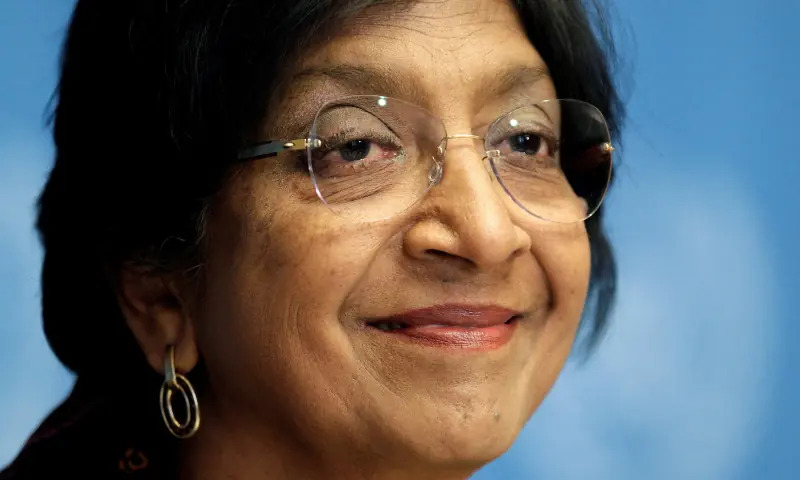
Navanethem Navi Pillay, renowned jurist and head of the United Nations commission that previously declared genocide in Gaza, was awarded the prestigious 2026 Nobel Peace Prize on Friday. The Norwegian Nobel Committee lauded Pillay "for her efforts to promote peace and international law," highlighting her historic role in holding states and national leaders accountable for grave violations. Throughout her distinguished career, Pillay has consistently demonstrated a firm moral compass, bringing tangible hope to victims of violence and systemic conflict across multiple continents.
The committee emphasized a continuous thread running through her remarkable professional trajectory. This timeline spans from her courageous early legal defense of Nelson Mandela and other freedom fighters who stood resolute against the apartheid regime in South Africa, to her rigorous tenure as a judge in international criminal tribunals and her leadership in prominent UN fact-finding missions. By relentlessly pursuing accountability at the highest levels of global governance, Pillay has fundamentally reshaped the architecture of international justice and human rights enforcement.
Commercial & Economic Implications
While the Nobel Peace Prize is fundamentally a recognition of humanitarian and legal achievement, geopolitical stability and international law hold profound indirect implications for global commerce, sovereign risk, and emerging market trade dynamics. For import-dependent developing economies like Pakistan, the enforcement of international legal frameworks and human rights norms directly influences international trade agreements, foreign direct investment inflows, and preferential access to vital export markets such as the European Union under Generalized System of Preferences schemes.
Furthermore, prolonged geopolitical instability, humanitarian crises, and conflicts—such as those investigated by commissions under Pillay's purview—exert immense upward pressure on global energy prices, supply chain resilience, and inflationary trends. International trade stakeholders, wholesale distributors, and retail sectors in Pakistan closely monitor global diplomatic stability, as shifts in international relations directly dictate commodity pricing, shipping insurance premiums, and macroeconomic stability.
Related Intelligence: OpenAI Safety Firings Spark Global Governance and Tech Supply Chain Debate
Stakeholder Perspectives & Market Reactions
International legal bodies, human rights organizations, and diplomatic circles have overwhelmingly praised the Norwegian Nobel Committee's decision, viewing it as a powerful validation of multilateralism and universal jurisdiction at a time of escalating global friction. Civil society groups across South Asia and globally have hailed the recognition as a testament to the enduring power of judicial independence and the fight against impunity.
At the same time, policy analysts and market observers note that the honor underscores the growing intersection between global governance, international law, and economic stability. Industry bodies and trade associations emphasize that predictable international rules-based orders remain vital for mitigating commercial risks, securing predictable supply chains, and maintaining investor confidence across developing markets.
Forward Outlook & Key Watchpoints
The formal presentation of the 2026 Nobel Peace Prize is scheduled for later this year in Oslo, where global leaders, jurists, and diplomats will gather to honor Pillay's legacy. Observers will monitor how this international recognition impacts ongoing global accountability mechanisms, particularly regarding resolutions on conflict zones, war crimes investigations, and the enforcement of UN mandates.
For policymakers and business leaders in Pakistan and the broader region, key watchpoints include potential shifts in Western diplomatic priorities, evolving trade compliance standards linked to human rights, and the broader macroeconomic fallout of international legal disputes on global energy and commodity markets.
Join Our Official WhatsApp Channel
Receive live commodity alerts, policy changes, and commercial intelligence directly on WhatsApp.