
Naqvi Accuses KP Government of Breaking Counterterrorism Pacts
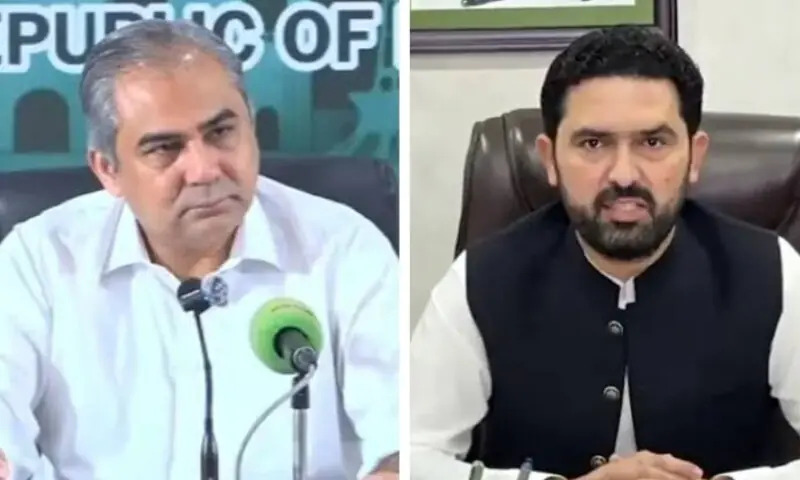
Federal Interior Minister Mohsin Naqvi accused the Khyber Pakhtunkhwa government of reneging on critical counterterrorism commitments agreed upon during weekend negotiations.
The Core Development
Federal Interior Minister Mohsin Naqvi publicly accused the Khyber Pakhtunkhwa (KP) provincial administration on Sunday of backtracking on critical counterterrorism commitments made during high-stakes negotiations over the weekend. According to statements released via social media platform X, the provincial government, led by the Pakistan Tehreek-e-Insaf (PTI), had initially agreed to execute a formal written agreement and submit a comprehensive implementation roadmap within a strict 72-hour window. The framework was primarily designed to address escalating security vulnerabilities, curb militant activities, and harmonize counter-extremism policies between the federal center and the province.
Mr. Naqvi outlined that the tentative consensus encompassed several sweeping measures. Crucially, the PTI administration reportedly agreed to reconsider the contentious Police Act 2026 to insulate security operations from political interference. Other pillars of the purported agreement included actionable pledges to prevent militants from establishing safe havens within KP, an unequivocal condemnation of the banned Tehreek-e-Insap Pakistan (TTP) alongside all affiliate terrorist outfits, and full institutional cooperation with federal frameworks governing Afghan refugee repatriation and the dismantling of unauthorized refugee camps. Furthermore, the consensus reportedly prohibited unauthorized provincial liaisons with the interim Afghan government, alongside commitments for substantial budgetary allocations toward specialized counterterrorism units.
Commercial & Economic Implications
For Kalyar Traders and the broader business community across Pakistan, persistent security friction between federal and provincial authorities carries profound commercial and economic costs. Khyber Pakhtunkhwa serves as a vital arterial corridor for domestic wholesale distribution and bilateral trade with Central Asia via the Torkham border. Protracted political instability and security deficits directly imperil supply chains, escalating logistic overheads and transport insurance premiums for wholesale distributors and retail traders alike.
Unresolved counterterrorism deadlocks generate immediate anxieties across local markets, dampening investor confidence and delaying capital expenditure. In an economy grappling with stubborn inflation and fragile foreign exchange reserves, trade disruptions stemming from security crackdowns or border closures instantly pressure commodity prices. Uncertainty surrounding regional stability deters vital commercial investments in northern trade hubs, squeezing profit margins for micro, small, and medium enterprises (MSMEs) that depend on seamless, predictable inter-provincial freight movement.
Related Intelligence: Khyber Pakhtunkhwa Government Accused of Breaking Counterterrorism Pacts
Stakeholder Perspectives & Market Reactions
Business councils, trade associations, and industrial bodies have expressed deep dismay over the ongoing political brinkmanship, warning that security governance is being compromised for partisan gains. Chambers of commerce in Peshawar and Islamabad have repeatedly emphasized that sustained economic recovery is inextricably linked to absolute internal security and seamless administrative coordination between Islamabad and provincial capitals.
Legal experts and constitutional analysts have highlighted the structural fault lines exposed by these failed negotiations, noting that overlapping jurisdictions between federal enforcement agencies and provincial police forces create dangerous operational vacuums. Meanwhile, official responses from PTI leadership have dismissed the federal allegations as politically motivated posturing, intended to deflect from broader governance failures. The breakdown in communication has intensified public anxiety, leaving civil society actors demanding transparent, bipartisan mechanisms to insulate national security and economic infrastructure from partisan political disputes.
Forward Outlook & Key Watchpoints
As the dust settles on the collapsed weekend talks, market participants and policy analysts are closely monitoring subsequent administrative developments. Key watchpoints include whether federal authorities will pursue unilateral enforcement mechanisms within KP or if renewed backchannel diplomacy can revive the stalled 72-hour implementation plan. Commercial stakeholders must prepare for potential trade bottlenecks, heightened security checks along major transit routes, and localized market volatility as the federal-provincial standoff persists without a unified counterterrorism consensus.
Join Our Official WhatsApp Channel
Receive live commodity alerts, policy changes, and commercial intelligence directly on WhatsApp.