
Deadly Mindanao School Shooting Sparks Fresh Scrutiny Over Regional Security Risks
A fatal shooting at an educational facility in Mindanao has heightened security concerns across the southern Philippines, testing regional governance and drawing scrutiny from international observers and trade partners.
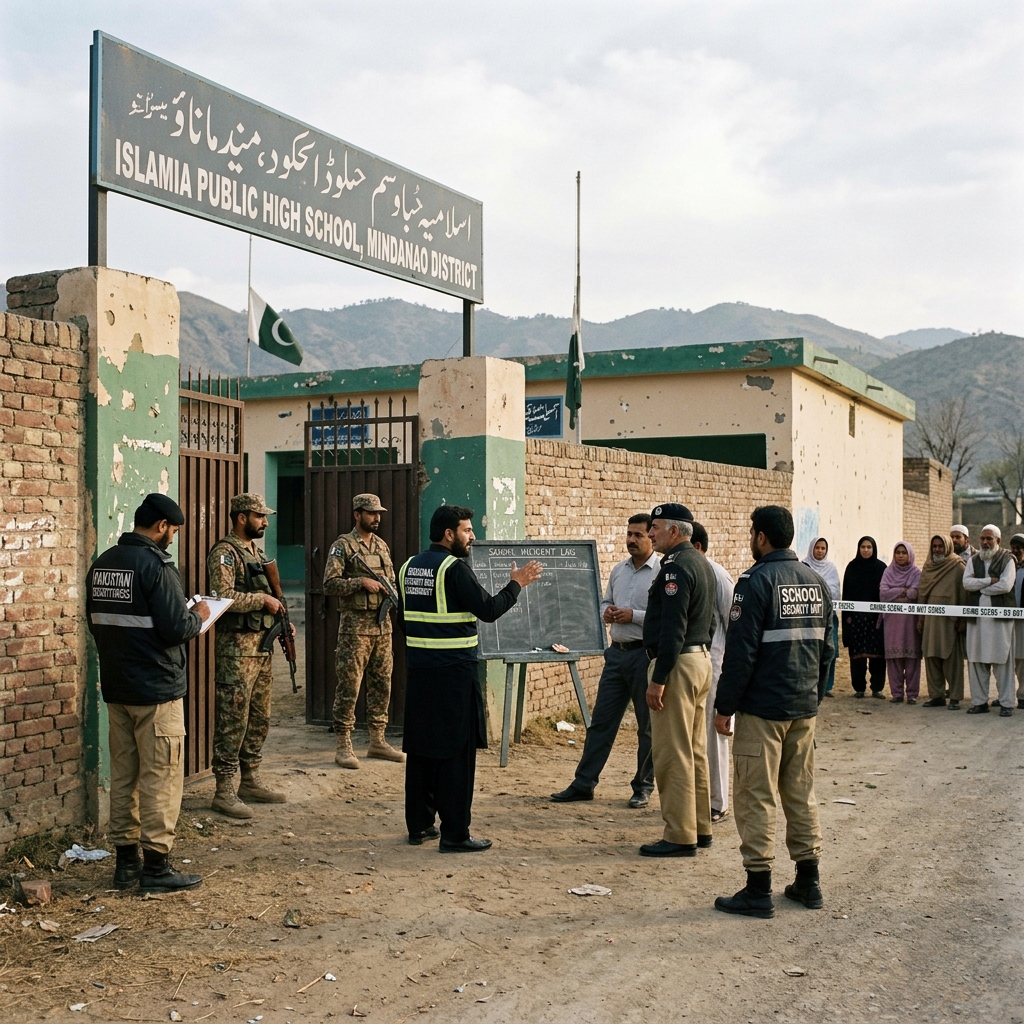
Geopolitical & Core Developments
A fatal shooting incident at an educational institution in the municipality of Banga, situated within the southern Philippine province of South Cotabato on the island of Mindanao, has claimed at least one life and left several others wounded. Law enforcement contingents and emergency personnel mobilized rapidly to secure the premises, cordon off surrounding roadways, and initiate formal investigative procedures to determine the perpetrators, operational methods, and underlying motives. Although school-centered mass violence is statistically rare across Southeast Asia, armed incidents in Mindanao immediately activate heightened regional security protocols due to the island's complex socio-political history.
Mindanao occupies an intricate position within the strategic architecture of the Philippines. Despite landmark stabilization gains achieved through institutional peace pacts—most visibly the consolidation of the Bangsamoro Autonomous Region in Muslim Mindanao (BARMM)—sub-provincial jurisdictions continue to contend with localized armed flare-ups, clan disputes, and an entrenched illicit small-arms trade. For the administration of President Ferdinand Marcos Jr., maintaining absolute stability across Mindanao is vital. Sporadic breakdowns in municipal security challenge Manila's broader diplomatic and macroeconomic narrative, which seeks to project an image of uninterrupted structural reform and sovereign stability to prospective foreign partners.
Global Trade & Economic Ripples
While fundamentally an urgent domestic law enforcement matter, security developments in Mindanao carry measurable implications for transnational commerce and regional logistics. The island serves as the premier agro-industrial engine of the Philippines, yielding the overwhelming share of the nation's high-value agricultural exports, including Cavendish bananas, pineapples, rubber, and processed coconut oil destined for major consumer hubs in China, Japan, South Korea, and the Middle East.
Episodes of targeted violence in South Cotabato and neighboring agrarian corridors inevitably lead domestic logistics providers and multinational agribusiness firms to review transport security protocols and localized inland risk pricing. Unresolved security threats can introduce friction along key arterial transit routes connecting inland plantations to maritime export infrastructure, such as the deep-water port facilities in General Santos City and Davao. Moreover, international commodity desks and sovereign risk analysts monitor these developments to gauge whether localized volatility could hinder long-term capital allocation into the region's expanding agro-logistics and mineral extraction projects.
Related Intelligence: South Korea Rejects Iran Military Deployment Amid Deepening Middle East Tensions
International Reactions & Diplomatic Stances
Foreign diplomatic missions based in Manila maintain an active watch over southern Philippine security developments. Western, East Asian, and regional embassies frequently recalibrate official consular advisories based on occurrences of violent crime and localized instability in Mindanao. Such advisories exert direct influence on foreign direct investment sentiment, corporate personnel travel approvals, and international technical mission deployments across the southern provinces.
At the multilateral level, international bodies and United Nations specialized entities centered on child welfare and educational access consistently underline the imperative of preserving educational zones as safe environments shielded from armed violence. Concurrently, regional security analysts throughout the Association of Southeast Asian Nations (ASEAN) examine the incident against the wider backdrop of illicit weapons circulation, emphasizing that maritime porousness across the tri-border region connecting the southern Philippines, eastern Malaysia, and northern Indonesia continues to complicate regional arms interdiction and policing cooperation.
Strategic Outlook & Future Scenarios
In the immediate timeframe, the Philippine National Police, backed by localized military task forces, are anticipated to scale up checkpoint operations, cordon sweeps, and weapons audits across South Cotabato to deter potential retaliatory acts or collateral disturbances. The episode is also poised to reignite legislative debates within the Philippine Congress regarding gun control enforcement and firearms registration compliance in rural provinces.
Over the medium-to-long horizon, sustaining verifiable stability in Mindanao remains essential to the economic vitality of the Brunei Darussalam-Indonesia-Malaysia-Philippines East ASEAN Growth Area (BIMP-EAGA). Major infrastructure initiatives backed by multilateral lenders, including the Asian Development Bank and international development agencies, require a secure operating theatre. Manila's capacity to contain localized violence and enforce rule-of-law benchmarks will determine whether the southern Philippines can continue to attract foreign investment into its strategic trade hubs and resource corridors.
Join Our Official WhatsApp Channel
Receive live commodity alerts, policy changes, and commercial intelligence directly on WhatsApp.