
Makkah Defence Alliance Formed to Bolster Regional Stability
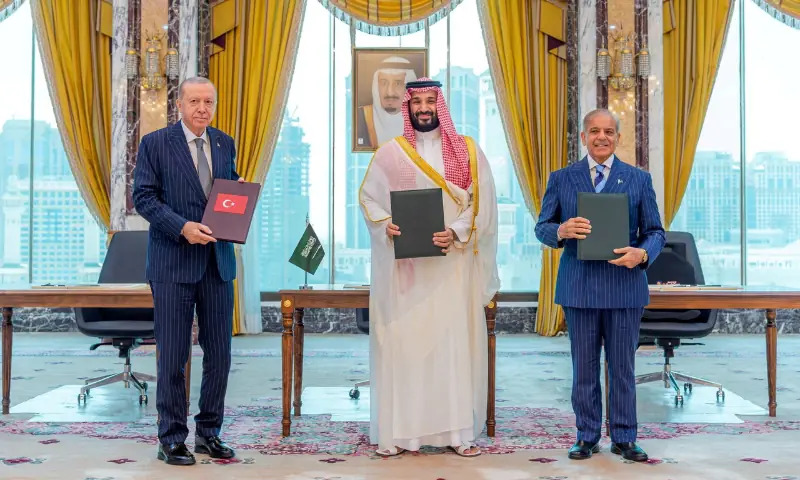
Saudi Crown Prince Mohammed bin Salman announced the institutionalization of the Makkah Defence Alliance with Turkiye and Pakistan to enhance regional security and shield markets from conflict.
The Core Development
In a major geopolitical development, Saudi Crown Prince Mohammed bin Salman announced the formal institutionalization of the Makkah Defence Alliance, a strategic trilateral security framework comprising the Kingdom of Saudi Arabia, Turkiye, and Pakistan. Delivering the annual royal address on behalf of King Salman bin Abdulaziz at the opening of the third year of the ninth session of Saudi Arabia's Shura Council, the crown prince emphasized that the coalition is engineered to bolster regional stability and insulate the Middle East and South Asia from escalating external tensions and conflicts.
Under the architecture of the pact, Pakistan has been entrusted with heading the alliance's central secretariat for an initial three-year term, marking a pivotal diplomatic and strategic milestone for Islamabad. The alliance consolidates military, intelligence, and logistical coordination between three of the most potent armed forces in the Muslim world. Policy analysts note that the framework moves beyond traditional bilateral pacts, creating a unified multilateral deterrence mechanism designed to address evolving asymmetric threats, secure vital maritime trade routes, and harmonize counter-terrorism strategies across member states.
Commercial & Economic Implications
For Kalyar Traders and the broader commercial landscape in Pakistan, enhanced defense and strategic alignment with Saudi Arabia and Turkiye directly translates into a more predictable macroeconomic environment. Regional stability is a vital prerequisite for foreign direct investment (FDI) and sustained capital inflows. By insulating trade routes from geopolitical shocks, the Makkah Defence Alliance helps stabilize global energy prices and secure petroleum supply chains essential for Pakistan's import-dependent economy.
Furthermore, closer institutional ties between Islamabad, Riyadh, and Ankara pave the way for expanded preferential trade agreements, joint ventures in defense production, and bilateral investments in infrastructure, agriculture, and logistics. A secure trade corridor reduces sovereign risk premiums, eases inflationary pressures linked to supply chain bottlenecks, and provides wholesale distributors and retail markets with greater pricing stability. Lower volatility in foreign exchange markets and reinforced foreign reserves—bolstered by prospective bilateral financial support—will ultimately benefit domestic consumers through restrained import costs.
Related Intelligence: Sudans Kordofan Corridor Becomes Crucial Battleground for Trade and Power
Stakeholder Perspectives & Market Reactions
Business councils, trade associations, and financial analysts in Pakistan have reacted positively to the announcement, viewing the leadership of the alliance secretariat as an endorsement of the country's strategic and administrative capability. Chambers of commerce in major commercial hubs have highlighted that institutionalized security cooperation provides the necessary confidence for international institutional investors to deploy capital into Pakistan's industrial and retail sectors.
Defense economists and policy experts note that while the alliance is primarily strategic, its economic dividend is substantial. Financial markets have shown resilience, anticipating that enhanced diplomatic capital will facilitate favorable economic packages, deferred oil payment facilities, and expanded export opportunities for Pakistani goods in Middle Eastern and Turkish markets. Legal and corporate observers emphasize that adherence to transparent secretariat operations will be critical to sustaining investor sentiment.
Forward Outlook & Key Watchpoints
As Pakistan assumes leadership of the Makkah Defence Alliance secretariat, attention will turn to the operationalization of its administrative bodies and the establishment of joint command protocols over the coming months. Key watchpoints for market participants include the finalization of the secretariat's charter, the timeline for joint military exercises, and the announcement of complementary economic cooperation frameworks.
Policymakers in Islamabad must leverage this strategic positioning to secure long-term trade concessions and energy security agreements. For the business community, monitoring how defense-led stability translates into actionable commercial treaties will dictate trade and investment strategies across wholesale and retail sectors through the fiscal year.
Join Our Official WhatsApp Channel
Receive live commodity alerts, policy changes, and commercial intelligence directly on WhatsApp.