
Khyber Pakhtunkhwa Police Law Overhaul Sparks Federal Clash
Federal authorities have sharply criticized Khyber Pakhtunkhwa's new police legislation, warning that curtailing the IGP's powers compromises provincial security and counter-terrorism efficacy.
The Core Development
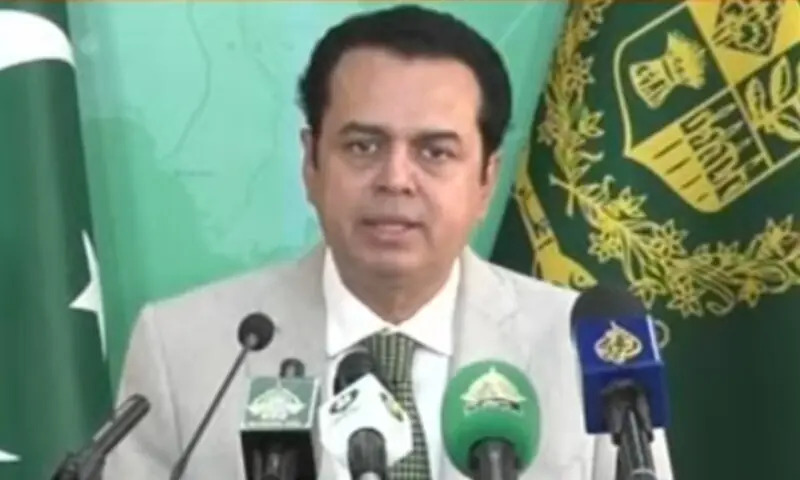
The political landscape of Pakistan has intensified following a direct confrontation between federal authorities and the Khyber Pakhtunkhwa provincial government over proposed structural reforms to law enforcement. On Thursday, Minister of State for Interior Tallal Chaudhry launched a scathing critique against the provincial administration's decision to replace the established KP Police Act of 2017. The controversy erupted just a day after the KP cabinet greenlit sweeping legislative changes designed to curtail the administrative, operational, and financial autonomy of the Inspector General of Police (IGP).
Under the newly approved legislative framework, the provincial police chief's authority will be systematically subordinated to executive oversight, requiring direct approval from the provincial government and the chief minister for core operational decisions. Speaking to media representatives in Islamabad, Chaudhry acknowledged that policing and public order fall within the domain of provincial governance under the constitutional parameters established by the 18th Amendment. However, he forcefully argued that provincial autonomy does not translate to absolute or unbridled legislative power, particularly when administrative shifts threaten national security infrastructure.
Commercial & Economic Implications
While framed primarily as a governance and administrative dispute, the weakening of police command structures carries profound economic reverberations for Kalyar Traders and the wider business community across Pakistan. Commercial stability, retail trade continuity, and wholesale distribution networks in the northwest heavily depend on predictable law and order and robust counter-terrorism operations. Any perceived friction or administrative paralysis within the provincial security apparatus immediately dampens investor sentiment and disrupts vital supply chains connecting Khyber Pakhtunkhwa with federal markets and international trade routes through Torkham.
Persistent security vulnerabilities and fragmented police command directly fuel logistical delays, inflate transportation risk premiums, and ultimately exert upward pressure on consumer prices and localized inflation. Commercial enterprises operating in volatile border regions require a unified, professional, and insulated police force to safeguard inventory, protect transport fleets, and maintain uninterrupted commercial transactions. Disrupting the operational chain of command risks creating regulatory uncertainty, which businesses and financial markets view as a direct threat to capital deployment and regional economic growth.
Related Intelligence: Lahore High Court Orders Punjab Police to Rectify Illegible FIR Formatting
Stakeholder Perspectives & Market Reactions
Reaction from trade bodies, legal experts, and civil society organizations has been swift and deeply polarized. Representative associations for traders and industrialists have expressed acute anxiety over the potential politicization of the police force, noting that operational independence is vital for maintaining a secure environment conducive to commerce. Industry stakeholders emphasize that effective policing must remain insulated from shifting political expediencies to ensure consistent protection for commercial hubs and trade arteries.
Legal analysts point out that while provinces possess the legislative competence to structure their police departments, altering the balance of power between elected executives and professional commanders risks constitutional friction. Critics argue that making the IGP entirely dependent on political clearance for operational maneuvers compromises the foundational reforms achieved under past police order frameworks, potentially demoralizing the rank and file.
Forward Outlook & Key Watchpoints
As this legislative battle moves toward formal assembly debates, several critical milestones and key watchpoints will determine the trajectory of governance and security in the region. Observers will closely monitor whether the federal government pursues formal legal challenges in higher courts or initiates inter-governmental mediation to stall the implementation of the contentious act.
Key indicators to watch include the formal response from senior police leadership within the province, potential interventions by the judiciary regarding provincial legislative overreach, and the broader fallout on federal-provincial fiscal and administrative cooperation. For businesses, investors, and citizens alike, the ultimate resolution of this dispute will set a vital precedent for how security governance is managed across Pakistan's federating units.
Join Our Official WhatsApp Channel
Receive live commodity alerts, policy changes, and commercial intelligence directly on WhatsApp.