
JI Schedules Islamabad Long March Over Escalating Energy and Tax Burdens
Jamaat-e-Islami has declared a nationwide march on Islamabad for September 23-24, citing government failure to fulfill negotiated pledges on electricity tariffs, taxation, and capacity payments to Independent Power Producers.
The Core Development
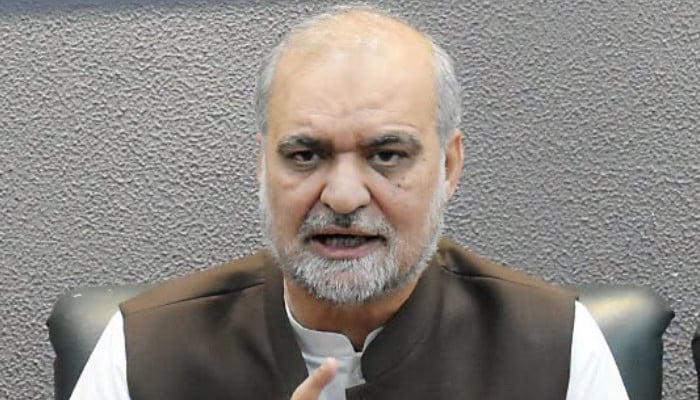
Jamaat-e-Islami (JI) Emir Hafiz Naeem ur Rehman has officially declared that his party will lead a long march into Islamabad on September 23 and 24, mounting renewed pressure on the federal administration over power tariffs and commercial taxation. The development follows a 45-day deadline established during earlier negotiations between the party leadership and a high-powered federal committee, which had led to the conditional postponement of a protracted sit-in along Murree Road in Rawalpindi.
According to the party leadership, the federal government has reneged on core clauses of the written agreement signed in August. The framework had committed the state to form a technical working group to renegotiate contracts with Independent Power Producers (IPPs), rationalise excessive fuel price adjustments, re-evaluate income tax slabs on the salaried class, and reconsider controversial trader tax documentation schemes. Addressing party cadres and media representatives, Rehman stated that administrative inaction has left JI with no viable alternative but to mobilise public and commercial stakeholders toward the federal capital.
Commercial & Economic Implications
The planned march introduces acute logistical and operational risks across Pakistan's wholesale and retail landscape. Supply corridors linking central and northern Punjab with Khyber Pakhtunkhwa and the Islamabad Capital Territory—specifically the Grand Trunk (GT) Road and key interchanges of the M-1 and M-2 Motorways—face substantial transit friction. Freight movement, particularly the flow of fast-moving consumer goods, industrial raw materials, and agricultural perishables, is vulnerable to containerised roadblocks and security cordons typically deployed during federal demonstrations.
Beyond immediate physical disruptions, the march underscores broader structural distress in the national economy. Commercial enterprises continue to battle unprecedented overheads driven by base electricity rates exceeding PKR 60 to 70 per unit after taxes and surcharges. Industrial units, especially medium and small enterprises (MSMEs), are operating well below installed capacity due to unviable utility inputs. For distributors and retail merchants, the squeeze on household disposable income has triggered a pronounced contraction in retail volumes, rendering the cost of carrying inventory increasingly unsustainable amid high borrowing rates.
Related Intelligence: Pakistan Bar Council Demands Immediate Action on Fuel Price Inflation
Stakeholder Perspectives & Market Reactions
The announcement has resonated strongly across the commercial spectrum, drawing sympathetic statements from various trade associations. Bodies representing retail and wholesale merchants, including factions of the All Pakistan Anjuman-e-Tajiran, have repeatedly registered dissatisfaction with the government's Tajir Dost Scheme, citing aggressive advance taxation without commensurate public services or transparent consultation. Many trade leaders view the JI movement as a convergence point for commercial grievances regarding utility pricing and the fiscal footprint of IPP capacity obligations.
Conversely, macroeconomic managers and state representatives maintain that their policy scope remains severely constrained by fiscal commitments agreed under the International Monetary Fund's (IMF) Extended Fund Facility. Government interlocutors have cautioned that unilateral revisions to power purchase agreements or arbitrary tariff cuts could jeopardize fiscal targets, widen the energy sector's circular debt—which currently hovers near PKR 2.6 trillion—and undermine external financing assurances.
Forward Outlook & Key Watchpoints
The trajectory of the standoff over the coming fortnight will largely hinge on whether the federal administration initiates backchannel talks to avert a physical siege of Islamabad. Observers should monitor the activities of the Prime Minister's energy task force, particularly regarding any public disclosures on the renegotiation of terms with first-generation private power producers or prospective structural reductions in non-fuel charges.
Should administrative reconciliation falter, security measures in the federal capital are expected to escalate significantly by September 21, with extensive shipping container placements, localized telecommunications disruptions, and Section 144 enforcements. Commercial distributors, fleet operators, and institutional traders are advised to front-load supply dispatches and hedge against regional inventory delays ahead of the September 23 deadline.
Join Our Official WhatsApp Channel
Receive live commodity alerts, policy changes, and commercial intelligence directly on WhatsApp.