
Iran Calls US Policies Terrorist at UN While Signaling Diplomatic Opening
Iranian President Masoud Pezeshkian utilized his United Nations address to denounce US policies as terrorist while simultaneously leaving the door open for diplomatic negotiations and addressing strategic maritime choke points.
Geopolitical & Core Developments
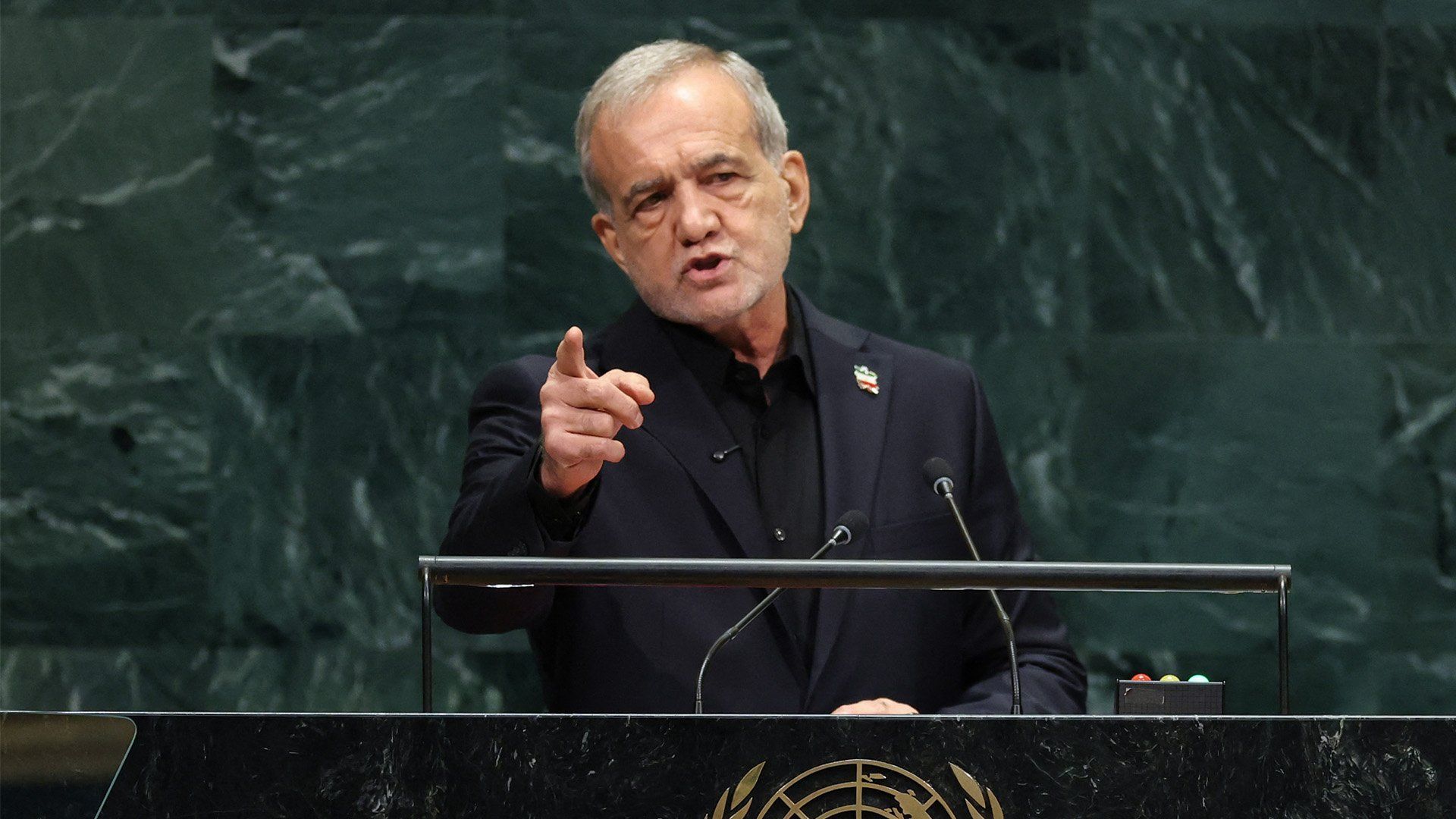
Addressing the United Nations General Assembly in New York, Iranian President Masoud Pezeshkian delivered a dual-toned address that combined sharp rhetorical condemnations of Western policy with deliberate overtures toward renewed diplomatic dialogue. Pezeshkian explicitly labeled United States economic and strategic maneuvers as forms of state-sponsored terrorism, focusing heavily on Washington's sustained enforcement of comprehensive sanctions and military postures in the Middle East. The Iranian leader placed particular emphasis on what Tehran characterizes as an aggressive US naval blockade and operational interference within the vital Strait of Hormuz, a narrow maritime corridor that serves as the principal artery for Persian Gulf crude exports. Despite the sharp diplomatic rhetoric, Pezeshkian's address signaled a strategic calculation by the newly installed administration in Tehran to avoid complete diplomatic isolation. By formally stating that Iran remains willing to engage with international stakeholders under principles of mutual respect, the administration attempts to project pragmatic governance while domestic economic pressures mount under the weight of international financial restrictions.
Global Trade & Economic Ripples The intersection of Iranian geopolitical posturing and maritime security in the Strait of Hormuz carries immediate, profound implications for global energy [markets and](/news/super-el-nino-threatens-global-markets-and-vulnerable-economies) international commodity flows. Approximately one-fifth of the world's petroleum consumption passes through the narrow waterway, making any friction between Iranian military forces and Western naval coalitions an acute risk factor for global crude pricing. Energy traders and major commodities houses immediately factored the heightened rhetoric into forward contracts, driving volatility across Brent and West Texas Intermediate benchmarks. Beyond crude petroleum, international supply chains dependent on uninterrupted passage through the Persian Gulf face heightened insurance premiums and potential rerouting costs. Shipping operators are reassessing risk parameters as tensions in the region threaten to manifest as kinetic disruptions or heightened enforcement actions against tankers carrying sanctioned energy products. Furthermore, currency markets in emerging economies reliant on stable energy imports registered nervous fluctuations as foreign exchange desks priced in the tail risk of a broader Middle Eastern maritime confrontation.
Related Intelligence: Yemeni Government Launches Dual Military and Diplomatic Push Against Houthi Forces
International Reactions & Diplomatic Stances The international community responded to Pezeshkian's United Nations address with a mix of cautious skepticism [and diplomatic](/news/yemeni-government-military-diplomatic-push-houthi-gains) appraisal. United Nations officials and European diplomatic delegations emphasized the necessity of keeping communication channels open to prevent accidental military escalation in the Persian Gulf. Western capitals, however, reiterated that any meaningful relief from the punishing economic sanctions regime remains contingent upon verifiable curbs on Tehran's nuclear development program and a cessation of regional proxy support. Market analysts and geopolitical risk consultancies noted that while Pezeshkian's tone marks a departure from the more uncompromising stances of his predecessors, tangible policy shifts on the ground remain elusive. Multilateral bodies have called upon all state actors to exercise maximum restraint in regional waters, underscoring that freedom of navigation through the Strait of Hormuz is a non-negotiable pillar of global commercial stability.
Strategic Outlook & Future Scenarios Looking ahead, the trajectory of US-Iran relations and its subsequent impact on global trade will depend heavily on backstage diplomatic maneuvers and upcoming international summits. While Pezeshkian's remarks create a theoretical opening for backchannel negotiations, the deep-seated structural mistrust between Washington and Tehran suggests that a breakthrough will be protracted and fraught with volatility. Observers are watching for potential diplomatic intermediaries, such as European or Gulf Arab nations, to attempt bridging the gap between the two adversaries. Should diplomatic efforts stall, analysts warn of a potential escalation cycle characterized by increased asymmetric naval friction in the Strait of Hormuz, tighter enforcement of secondary sanctions on Iranian oil exports, and renewed upward pressure on global energy prices heading into the upcoming fiscal quarters.
Join Our Official WhatsApp Channel
Receive live commodity alerts, policy changes, and commercial intelligence directly on WhatsApp.