
Indian Opposition Escalates Protests Over Electoral Controversy and Poll Chief Resignation
Indian opposition groups intensified protests for a third day, demanding the election chief's resignation over controversial voter list revisions allegedly favoring Prime Minister Modi's ruling party.
The Core Development
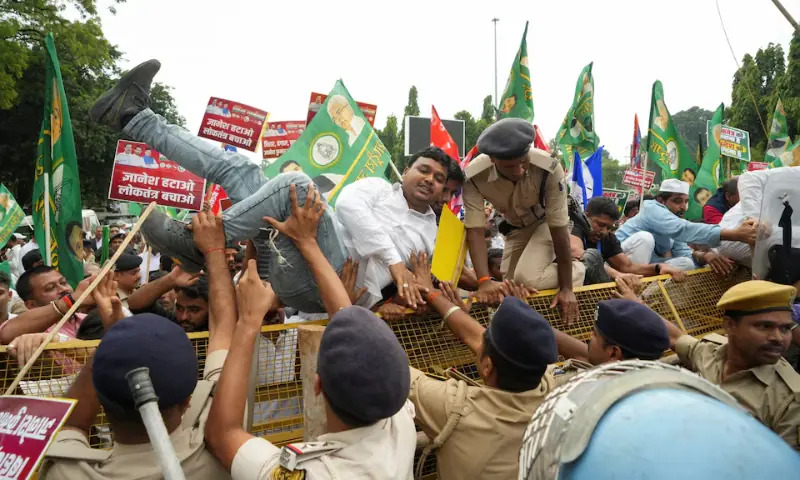
Indian opposition parties, allied student unions, and the prominent youth movement known as Cockroach have maintained a relentless wave of demonstrations for a third consecutive day, centering their fury on police action against Congress party leaders. The protests, which have gripped several urban centers across India, are anchored around a vehement demand for the immediate resignation of Chief Election Commissioner Gyanesh Kumar. The political crisis erupted following a deeply controversial overhaul of the national voter lists, which opposition figures argue has been engineered to systematically disenfranchise anti-establishment constituencies and tilt future electoral playing fields heavily in favor of Prime Minister Narendra Modi’s ruling Bharatiya Janata Party (BJP).
According to reports from Dawn News, the demonstrations have escalated from localized sit-ins into broad-based street mobilizations. Opposition leaders have accused the ruling administration of utilizing state machinery and executive appointees, specifically targeting Chief Election Commissioner Kumar, to execute a partisan revision of voter rolls. The friction intensified dramatically after security forces intervened against peaceful parliamentarians and party cadres, sparking nationwide outrage over alleged police brutality and the suppression of democratic dissent.
Commercial & Economic Implications
While the immediate theater of conflict remains political and legislative, prolonged instability within India's democratic framework carries acute macroeconomic consequences for regional trade partners, including Pakistan. Political uncertainty in South Asia's largest economy frequently translates into volatility in regional equity markets, investor sentiment, and currency valuations. For commercial enterprises operating across the subcontinent, institutional instability dampens cross-border trade outlooks and complicates supply chain forecasting.
Furthermore, prolonged domestic turmoil in India often forces the central government to pivot toward populist fiscal measures or intensive security spending, potentially impacting regional commodity prices, agricultural export parity, and bilateral trade corridors. For Pakistani wholesale distributors, retail trade associations, and industrial producers monitoring regional market signals, any major shift in New Delhi's economic policy focus—driven by political distraction or electoral maneuvering—can introduce unforeseen price fluctuations and disrupt established commercial supply chains.
Related Intelligence: Russian Transport Strikes Threaten Ukrainian Supply Chains and Global Grain Corridors
Stakeholder Perspectives & Market Reactions
Rallying behind the Congress party, major opposition coalitions have maintained that free and fair elections are the bedrock of economic stability and investor confidence. Industry bodies and legal experts in the region have expressed growing concern that compromised electoral integrity could degrade institutional checks and balances, ultimately undermining long-term foreign direct investment.
Conversely, representatives of the ruling Bharatiya Janata Party have dismissed the protests as desperate political posturing by fragmented opposition groups attempting to delegitimize constitutional authorities. Government spokespersons maintain that the voter list revision is a routine, transparent administrative update designed to purge discrepancies and ensure electoral accuracy. However, legal analysts point out that the unprecedented public mobilization and the direct targeting of the Chief Election Commissioner signal a deepening crisis of trust between the executive branch and independent oversight institutions.
Forward Outlook & Key Watchpoints
As the opposition coalition vows to sustain its street agitation until concrete concessions are secured, political analysts are closely monitoring several critical indicators. Key watchpoints include the response of the Supreme Court of India to potential legal challenges regarding the voter list revision, the government's willingness to engage in parliamentary dialogue, and the potential expansion of civil disobedience movements.
For regional observers and commercial stakeholders at Kalyar Traders, the trajectory of this standoff will determine whether India faces a protracted constitutional crisis or a negotiated political settlement. Sustained unrest could delay vital economic reforms and trade policy decisions, necessitating continuous risk assessment for businesses reliant on regional economic stability.
Join Our Official WhatsApp Channel
Receive live commodity alerts, policy changes, and commercial intelligence directly on WhatsApp.