
Government and PTI Initiate Secret Talks Ahead of October 4 March
High-level backchannel negotiations have commenced between government officials and PTI leadership to avert potential instability surrounding the scheduled October 4 long march.
The Core Development
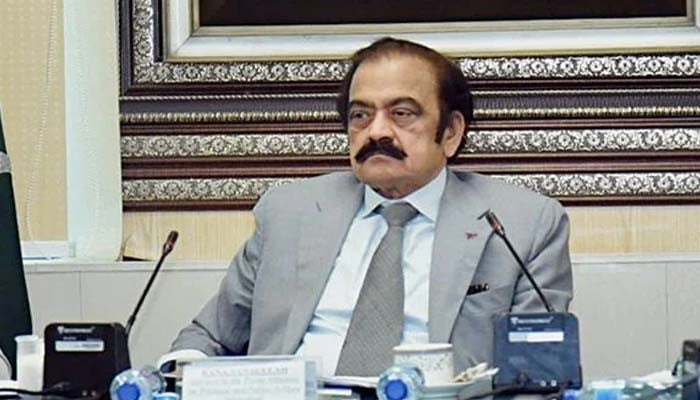
High-level backchannel negotiations have officially commenced between representatives of the federal government and the opposition Pakistan Tehreek-e-Insaf (PTI), according to a senior prime ministerial aide. The confidential off-the-record talks are primarily focused on de-escalating tensions surrounding PTI's heavily publicized nationwide long march, scheduled for October 4. The discussions involve key political mediators from both sides attempting to establish a framework for peaceful political engagement while addressing core grievances raised by the opposition.
The timing of these backchannel engagements underscores the acute sensitivity surrounding the upcoming mobilization. Government security apparatuses have been placed on high alert across major urban centers, particularly in Punjab and the federal capital, Islamabad, as authorities weigh potential containment strategies against the opposition's constitutional right to peaceful assembly. While official spokespersons remain tight-lipped regarding the specific terms being negotiated, sources close to the development indicate that venue permissions, security parameters, and potential dates for structured political dialogue form the core agenda of these clandestine meetings.
Commercial & Economic Implications
For Pakistan's commercial sectors, the specter of major street agitation introduces severe operational risks at a juncture when retail trade and wholesale distribution are striving to stabilize. Business chambers across Karachi, Lahore, and Faisalabad have repeatedly cautioned that political uncertainty directly undermines market confidence, stymies supply chains, and exerts upward pressure on consumer price inflation. Containerized blockades, transport disruptions, and sudden commercial shutdowns—frequently accompanying high-profile political marches—inflict immediate daily losses running into billions of rupees on small and medium enterprises (SMEs).
Furthermore, foreign investors and international multilateral lenders closely monitor domestic political stability as a primary indicator of sovereign risk. Protracted confrontation between the ruling coalition and the country's largest opposition bloc risks derailing critical structural benchmarks tied to ongoing macroeconomic stabilization programs. Retailers and manufacturers report that currency volatility and dampened consumer demand are exacerbated whenever political friction threatens to boil over into civil unrest, ultimately delaying vital capital investments and dampening retail turnover heading into the final quarter of the fiscal year.
Related Intelligence: Government and PTI Hold Backchannel Talks Ahead of Islamabad Protest
Stakeholder Perspectives & Market Reactions
Major trade bodies, including the Federation of Pakistan Chambers of Commerce and Industry (FPCCI) and various regional merchant associations, have issued urgent appeals for restraint and political compromise. Industry leaders argue that the national economy cannot absorb the collateral damage of another wave of violent protests or severe administrative clampdowns. Legal experts, meanwhile, emphasize the necessity of balancing constitutional freedoms of movement and assembly with the state's mandate to maintain public order and protect commercial infrastructure.
Public response remains deeply polarized, reflecting the broader societal divide. While PTI loyalists view the October 4 march as an essential democratic exercise to press for electoral transparency and the release of detained party members, government representatives maintain that unyielding agitation serves only to sabotage economic revival and invite administrative countermeasures. Civil society organizations have called upon both political leaderships to prioritize institutional stability and channel their disputes through parliamentary channels rather than street mobilization.
Forward Outlook & Key Watchpoints
As the October 4 deadline approaches, the success or failure of these off-the-record talks will dictate the immediate political and economic trajectory of the country. Key watchpoints include the formal outcomes of the backchannel committees, any official announcements regarding route adjustments or postponement of the march, and the posture adopted by law enforcement agencies in major metropolitan hubs.
Policy analysts note that a negotiated breakthrough could pave the way for a broader political dialogue, easing inflationary pressures driven by supply chain jitters and restoring a degree of predictability to commercial markets. Conversely, a breakdown in these secret deliberations would likely trigger heightened security deployments, severe traffic disruptions, and renewed financial volatility, further complicating Kalyar Traders' commercial forecasts and national economic indicators for the remainder of the year.
Join Our Official WhatsApp Channel
Receive live commodity alerts, policy changes, and commercial intelligence directly on WhatsApp.