
Government and Opposition Hold High Stakes Talks Ahead of October March
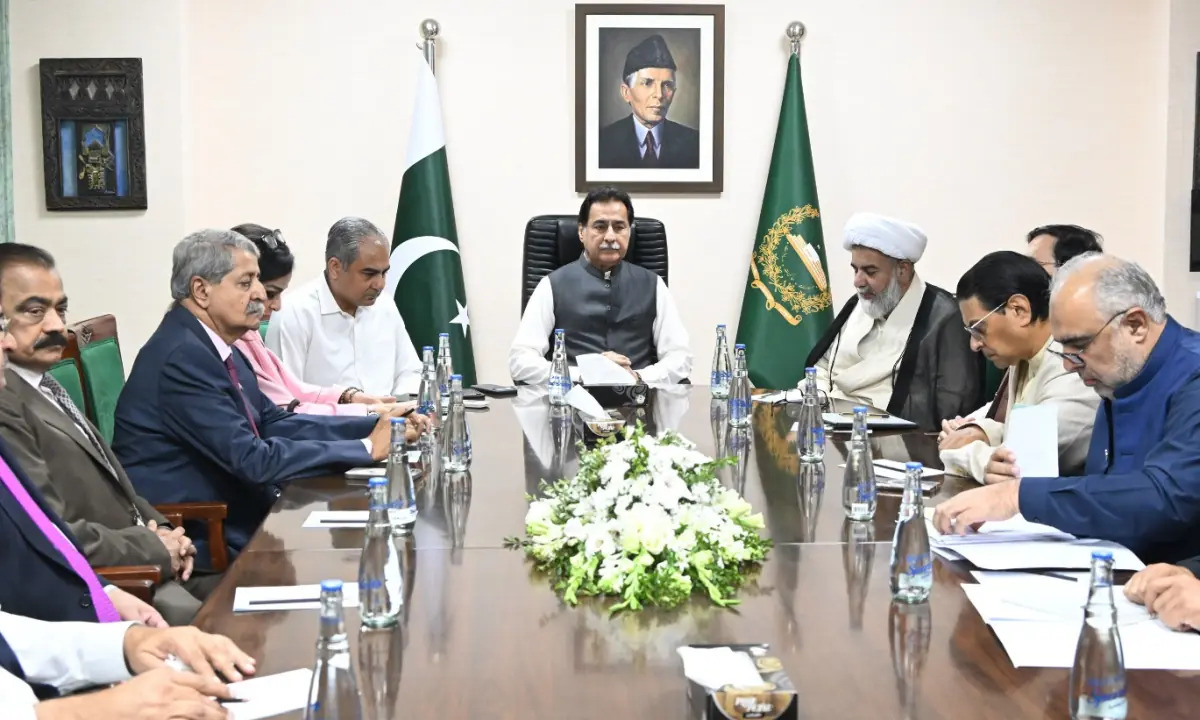
Government and opposition leaders concluded a marathon four-hour session at Parliament House on Saturday to address political instability and the Pakistan Tehreek-e-Insaf's looming October 4 protest march.
The Core Development
A tense political atmosphere gripped Islamabad on Saturday as representatives from the federal government and the opposition convened for a second round of high-stakes negotiations inside Parliament House. The crucial huddle, which commenced shortly before 5:00 PM and extended for over four hours, was convened primarily to address the widening political chasm threatening national stability. At the center of the agenda was the Pakistan Tehreek-e-Insaf (PTI) party's fiercely contested plan to stage a major protest march toward the federal capital on October 4. The demonstration, organized to demand the immediate release of imprisoned party founder and former prime minister Imran Khan, has emerged as the most volatile flashpoint between the ruling coalition and the opposition.
National Assembly Speaker Ayaz Sadiq chaired the deliberations, attempting to forge a consensus and avert potential clashes on the streets of the capital. Despite the extensive duration of the talks, participants maintained a strict media blackout, agreeing to withhold official statements until all matters reach a definitive conclusion. Security apparatuses across Islamabad and Punjab remain on high alert as the October 4 deadline approaches, with authorities weighing administrative containment strategies against negotiated settlements.
Commercial & Economic Implications
For the domestic business community, commercial distributors, and retail traders represented by Kalyar Traders, prolonged political uncertainty carries immediate and severe economic costs. Markets across Pakistan are acutely sensitive to political volatility, which consistently triggers capital flight, currency depreciation, and inflationary pressures. Disruptions anticipated from the October 4 march threaten to paralyze wholesale supply chains, block major transport arteries between Punjab and the capital, and severely impact daily retail turnover in urban centers.
Inflationary expectations remain anchored to supply chain stability. Any prolonged closure of major trade routes invariably leads to fuel price spikes, shortages of perishable commodities, and increased logistical overheads for manufacturers and distributors. Commercial stakeholders emphasize that continuous agitation dampens consumer confidence, discourages foreign direct investment, and complicates monetary policy management for the central bank as it struggles to maintain macroeconomic stability.
Related Intelligence: Pakistan Extends Paramilitary Deployment in Capital and Punjab Amid Political Unrest
Stakeholder Perspectives & Market Reactions
Business councils, industrial associations, and trade bodies have voiced mounting frustration over the incessant political friction. Chambers of commerce across major cities have issued joint appeals urging both the government and the opposition to prioritize economic recovery over partisan posturing. Representatives of wholesale markets argue that commercial activity cannot thrive in an environment of perpetual confrontation and civil disruption.
Legal experts and constitutional analysts observing the dialogue note that while parliamentary channels are the appropriate forum for conflict resolution, trust deficits between the negotiating parties remain a formidable obstacle. Public response has been polarized, with citizens expressing fatigue over recurring political crises that directly undermine their purchasing power and daily livelihoods. Official statements from government representatives continue to emphasize the primacy of the rule of law, while opposition figures insist that democratic freedoms and political prisoners remain non-negotiable.
Forward Outlook & Key Watchpoints
The immediate trajectory of Pakistan's political and economic landscape hinges entirely on the final outcome of these parliamentary negotiations and whether the PTI proceeds with its October 4 march. Key watchpoints for financial markets and business operators include any formal announcements from the Speaker's office, potential compromises regarding the venue or timing of the protest, and the deployment of security forces in Islamabad and Rawalpindi.
Policy enforcement measures, such as container placements and transit restrictions, will serve as primary indicators of state readiness. If talks collapse and confrontation ensues, commercial sectors must brace for localized economic shutdowns and heightened volatility. Conversely, a negotiated truce could restore a measure of business confidence, allowing supply chains to operate without disruption and offering temporary relief to commercial markets across the country.
Join Our Official WhatsApp Channel
Receive live commodity alerts, policy changes, and commercial intelligence directly on WhatsApp.