
Dar and Guterres Review Regional Security and Economic Stability
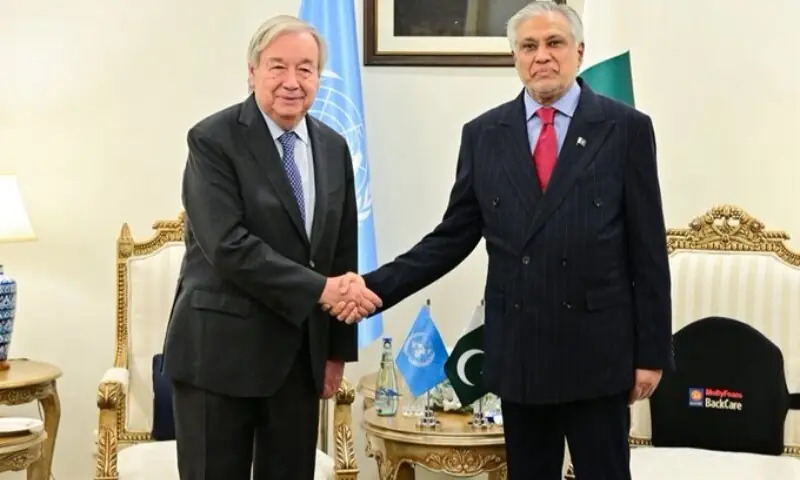
Deputy Prime Minister Ishaq Dar met UN Secretary-General Antonio Guterres in Islamabad to discuss regional security, Kashmir, and multilateral economic cooperation.
The Core Development
Deputy Prime Minister and Foreign Minister Ishaq Dar held high-level consultations with United Nations Secretary-General Antonio Guterres in Islamabad, marking a critical juncture in Pakistan’s diplomatic engagement with international multilateral institutions. The comprehensive dialogue, confirmed by the Ministry of Foreign Affairs, encompassed an exhaustive review of regional and global security architectures, ongoing geopolitical flashpoints, and the future framework of international cooperation.
The discussions went beyond routine diplomatic exchanges, directly addressing protracted regional disputes such as the situation in Jammu and Kashmir, the humanitarian and security crisis in Palestine, and the ongoing stabilization challenges in Afghanistan. Mr. Dar provided a detailed briefing on Islamabad's core positions, reiterating the imperative for a just and peaceful resolution of the Kashmir dispute strictly in alignment with relevant United Nations Security Council resolutions. Furthermore, the deliberations touched upon critical environmental and water security frameworks, notably the Indus Waters Treaty, where Pakistan underscored its steadfast commitment to legal mechanisms and international treaty obligations.
Commercial & Economic Implications
While ostensibly focused on geopolitics, the high-level dialogue between Islamabad and the United Nations carries profound economic and commercial ramifications for Pakistan's domestic markets, wholesale trade, and investor sentiment. Regional stability is a fundamental prerequisite for foreign direct investment (FDI) and the secure operation of vital trade corridors. Unresolved cross-border tensions directly influence sovereign risk ratings, borrowing costs on international capital markets, and foreign exchange reserves managed by the State Bank of Pakistan.
Moreover, strategic discussions regarding the Indus Waters Treaty and climate resilience are intricately tied to Pakistan's agrarian economy, which serves as the backbone of wholesale distribution and rural purchasing power. Disruption in water security paradigms poses direct inflationary risks to domestic food prices, commodity supply chains, and retail consumer markets. By engaging with the UN leadership on sustainable development frameworks, Pakistan aims to secure multilateral backing for climate adaptation initiatives, which insulate agricultural supply chains from external shocks and stabilize domestic retail inflation over the medium term.
Related Intelligence: Kenya Confirms First Ebola Fatality Raises Regional Trade and Health Alarms
Stakeholder Perspectives & Market Reactions
Business councils, trade associations, and financial analysts have closely monitored the Islamabad meetings, viewing diplomatic stability as an essential catalyst for commercial revitalization. Representatives from major chambers of commerce and industry noted that proactive foreign policy engagement helps mitigate perceived geopolitical risks, reassuring international supply chain partners and institutional investors.
Legal and policy experts have also emphasized the economic significance of Mr. Dar raising multilateral frameworks like the Indus Waters Treaty at the highest international level. Industry bodies stressed that predictable water resource management and adherence to international legal norms protect domestic industries from supply disruptions. Official statements from government and trade representatives underline a shared consensus: robust diplomatic outreach directly correlates with enhanced market confidence, smoother bilateral trade flows, and improved macroeconomic predictability.
Forward Outlook & Key Watchpoints
Looking ahead, the outcomes of the Dar-Guterres talks are expected to shape Pakistan’s diplomatic and economic strategy across several key milestones. Market observers and policy analysts will monitor upcoming multilateral forums, UN General Assembly sessions, and bilateral engagements for follow-up initiatives regarding climate finance, regional trade facilitation, and counter-terrorism cooperation.
Key watchpoints for the business and financial community include the progression of diplomatic efforts in Afghanistan, developments surrounding the Indus Waters Treaty negotiations, and tangible inflows of multilateral economic assistance tied to sustainable development goals. As Pakistan navigates its macroeconomic stabilization program, maintaining constructive dialogue with global institutions remains a cornerstone for ensuring long-term fiscal resilience, market expansion, and sustainable national growth.
Join Our Official WhatsApp Channel
Receive live commodity alerts, policy changes, and commercial intelligence directly on WhatsApp.