
Azerbaijan School Headscarf Ban Triggers Rare Protests and Friction With Turkey
Azerbaijan has faced rare domestic demonstrations and diplomatic friction with Ankara following the enforcement of a nationwide school headscarf ban under the country's strict secular educational policies.
Geopolitical & Core Developments
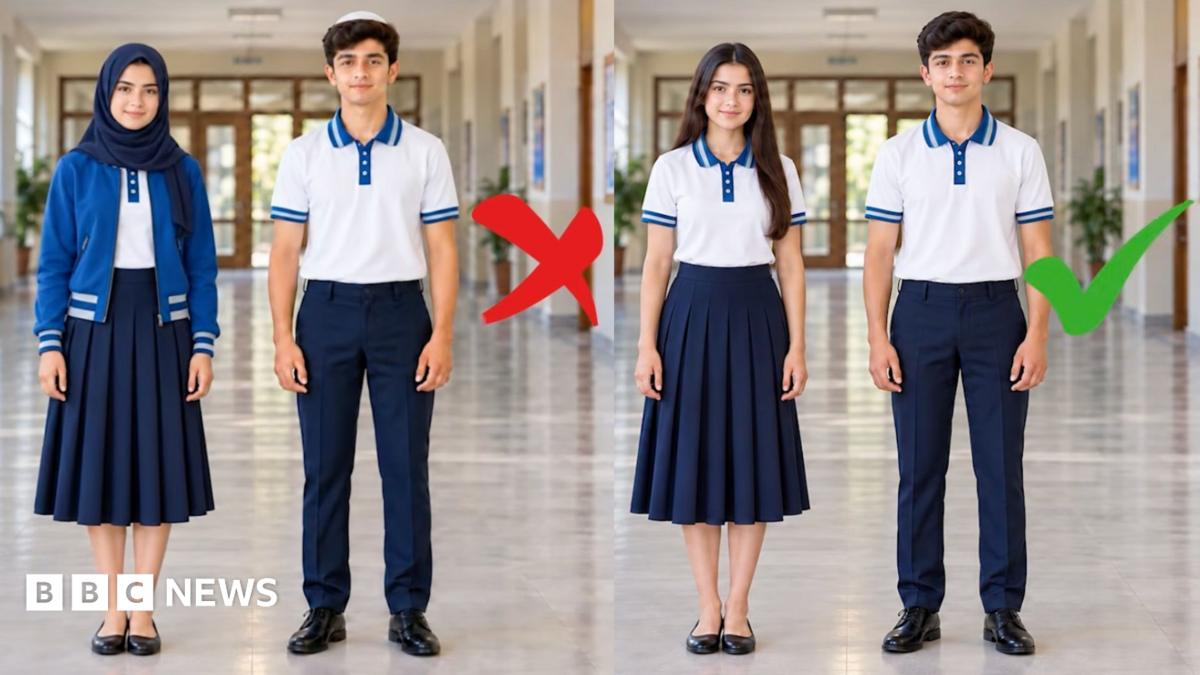
A regulatory enforcement banning the Islamic headscarf in Azerbaijan's public schools has ignited rare public demonstrations across several municipalities, exposing a sensitive socio-political fault line in the South Caucasus nation. Officials from Azerbaijan's Ministry of Science and Education confirmed that state schools are enforcing standardized secular uniform codes, resulting in female pupils wearing hijabs being turned away at school gates. The decision has catalyzed organized protests in Baku, Ganja, and southern conservative strongholds such as Nardaran, where demonstrators have clashed with local law enforcement, leading to dozens of administrative detentions.
The domestic dispute has quickly escalated into a diplomatic complication with Turkey, Baku's most vital geopolitical ally. While Ankara and Baku have long operated under the doctrine of 'one nation, two states'—solidified by joint military successes in the Nagorno-Karabakh conflicts—the ideological divergence over religious observance is creating institutional friction. Turkey's ruling Justice and Development Party (AKP) has historically positioned itself as an international defender of Islamic religious freedoms, contrasting sharply with Azerbaijan's fiercely guarded, post-Soviet secular constitution. Observers note that while state ties remain anchored in mutual security agreements, the public dispute over religious identity introduces an uncharacteristic strain on bilateral relations.
Global Trade & Economic Ripples
While the demonstrations remain primarily social and legislative in scope, international commodity markets and regional infrastructure analysts are closely monitoring developments due to Azerbaijan's pivotal role in Eurasian logistics. Azerbaijan serves as the linchpin for the Southern Gas Corridor, supplying natural gas directly to Southern Europe via the Trans Adriatic Pipeline (TAP) and the Trans Anatolian Pipeline (TANAP). Any sustained internal civil unrest or political instability near crucial transit nodes poses long-term operational considerations for European energy buyers seeking alternatives to Russian hydrocarbons.
Furthermore, the Middle Corridor—the trans-Caspian multimodal trade route linking China to Europe via Central Asia, Azerbaijan, and Turkey—relies heavily on absolute political continuity and regulatory predictability within Baku. Commercial entities operating logistics hubs across the Caspian Sea are assessing potential counter-actions or regulatory interventions. While freight rates and physical oil exports via the Baku-Tbilisi-Ceyhan (BTC) pipeline remain unhindered, increased security postures across Azerbaijani municipal centers signal heightened state vigilance, potentially elevating insurance and compliance risk premiums for regional joint ventures.
International Reactions & Diplomatic Stances
Official commentary from Ankara has taken a measured yet critical tone. Turkish civic groups, media outlets, and religious bodies aligned with the government have publicly called upon Azerbaijani authorities to respect fundamental human rights and educational access for observant Muslim students. Turkish parliamentary figures have urged Baku to implement regulatory compromises that reconcile secular governance with individual liberties, mindful of avoiding any breach in broader bilateral defense agreements.
In response, the Azerbaijani government has maintained an unyielding stance, emphasizing that constitutional secularism is non-negotiable. Law enforcement authorities in Baku have cautioned against external interference, hinting that conservative regional actors, particularly elements aligned with Iran, may be attempting to instrumentalize the dress code row to destabilize the state. International rights monitors, including European watchdogs, have expressed concern over arbitrary detentions of peaceful demonstrators while simultaneously urging regional actors not to exploit localized educational disputes for wider ideological leverage.
Strategic Outlook & Future Scenarios
Moving forward, President Ilham Aliyev's administration is expected to maintain its firm enforcement of public school dress codes, utilizing established state security apparatuses to preempt further public gatherings. The likelihood of an institutional capitulation to domestic conservative pressure remains low, as Baku views secularism as an essential pillar of state sovereignty and internal stability.
Diplomatically, Ankara and Baku will seek to compartmentalize the headscarf dispute to ensure strategic energy projects and military interoperability remain unaffected. However, the controversy offers conservative factions within the region an avenue to criticize Azerbaijan's social governance. Should civil unrest intensify, international investors will scrutinize Baku's internal security management, balancing commercial confidence against potential geopolitical shifts across the Caspian transit landscape.
Join Our Official WhatsApp Channel
Receive live commodity alerts, policy changes, and commercial intelligence directly on WhatsApp.