
ATC Judge Rips Police Over Imaan Mazari and Hadi Ali Case Record
An anti-terrorism court in Islamabad slammed police officials for failing to present case records and investigative officers during the bail hearing of lawyers Imaan Mazari and Hadi Ali Chattha.
The Core Development
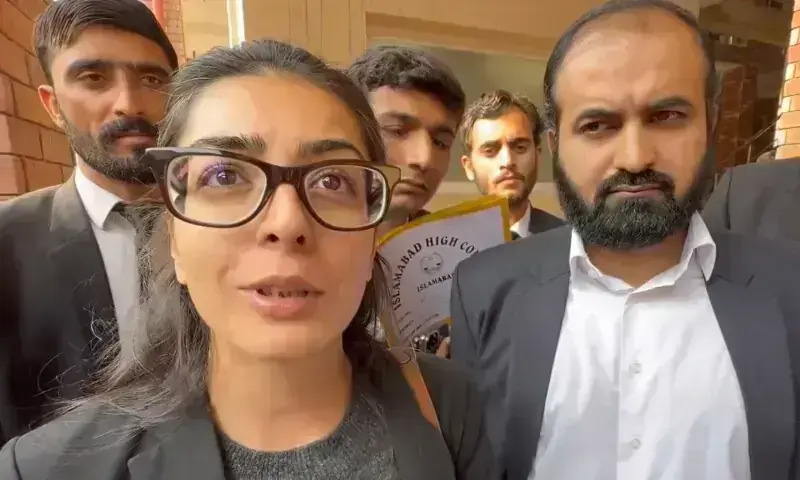
An anti-terrorism court (ATC) in Islamabad on Monday expressed strong displeasure over the absence of the investigating officer (IO) and the police department's systemic failure to produce crucial case records during the hearing of bail petitions filed by prominent lawyers Imaan Zainab Mazari-Hazir and her husband, Hadi Ali Chattha. The high-profile legal proceedings centered around a contentious protest-related case that has drawn significant national scrutiny.
Presiding over the hearing, ATC Judge Abul Hasnat Muhammad Zulqarnain took strict notice of the administrative lapses and immediately summoned the deputy superintendent of police (DSP) alongside the Judicial Complex's security head after learning that the primary IO was out of town without prior judicial notification. At the outset of the proceedings, the bench repeatedly pressed DSP Legal Naeem Yousuf regarding the whereabouts of the case files and the missing officer, demanding concrete documentary evidence rather than unverified verbal assertions.
When the DSP initially informed the court that the IO was out of town on official business, Judge Zulqarnain rejected the informal justification, emphasizing that judicial proceedings cannot be stalled due to administrative negligence. The court demanded official documentation supporting the officer's absence and underscored the gravity of withholding case records during liberty-related hearings.
Commercial & Economic Implications
While the proceedings directly involve legal and judicial actors, systemic inefficiencies in the administration of justice carry profound indirect consequences for Pakistan's commercial landscape, investor confidence, and macroeconomic stability. Prolonged judicial uncertainties, administrative delays, and perceptions of selective law enforcement create an unpredictable environment that dampens domestic trade and foreign investment.
For enterprises operating under the banner of Kalyar Traders and the wider mercantile community, the rule of law and predictable institutional functioning remain paramount. Delays in judicial accountability and police inefficiencies signal deeper structural weaknesses in state institutions, which ultimately translate into higher compliance costs, regulatory friction, and suppressed market sentiment across retail and wholesale sectors.
Related Intelligence: Lahore Court Extends Bail in High-Profile Foreign National Rape Case
Stakeholder Perspectives & Market Reactions
Rival legal fraternities, civil rights organizations, and commercial bodies have closely monitored the developments, raising persistent concerns regarding due process and institutional overreach. Legal experts argue that the failure of law enforcement agencies to present basic case records in anti-terrorism courts reflects poorly on investigative standards and undermines public trust in the justice system.
Trader associations and business councils have expressed growing apprehension over how institutional friction and political instability disrupt commercial supply chains and distract from pressing economic reforms. Industry leaders maintain that a stable, transparent, and efficient legal framework is an absolute prerequisite for sustainable economic growth and market confidence in Pakistan.
Forward Outlook & Key Watchpoints
The immediate focus shifts to the rescheduled court proceedings, where the prosecution will be legally mandated to present the complete case record and ensure the personal attendance of the investigating officer. Observers will closely track whether the ATC imposes formal penalties or issues stricter directives to enforce compliance among law enforcement personnel.
Key watchpoints include the court's final ruling on the bail petitions, potential administrative action against the defaulting police officials, and the broader implications for civil liberties litigation in Pakistan's anti-terrorism tribunals. Sustained judicial oversight will be vital in determining whether institutional accountability takes precedence over procedural laxity.
Join Our Official WhatsApp Channel
Receive live commodity alerts, policy changes, and commercial intelligence directly on WhatsApp.