
Adiala Jail Stand-Off Highlights Enforcement Deficit Amid Legal Battle
As detained family members miss scheduled sessions, PTI lawyers challenge Adiala Jail authorities over Islamabad High Court visitation orders, compounding broader national uncertainty.
The Core Development
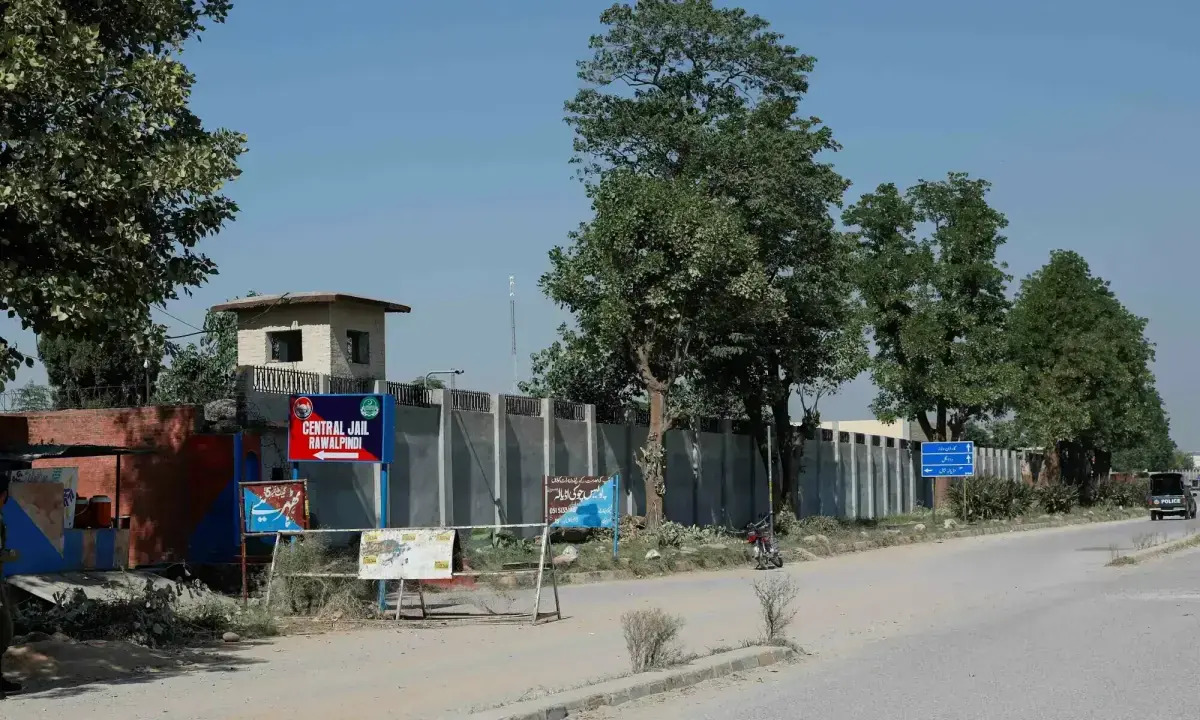
The legal and political friction surrounding incarcerated former prime minister Imran Khan escalated on Monday as Pakistan Tehreek-e-Insaf (PTI) legal representatives announced plans for alternative family members to visit Rawalpindi’s Adiala Jail on Tuesday. This maneuver follows the controversial detention of Mr. Khan’s sisters—Aleema, Uzma, and Noreen—who remain in custody under 30-day Maintenance of Public Order (MPO) regulations enforced across Lahore. Speaking to Dawn on Monday, PTI lawyer Awais Younas Chaudhry confirmed that the decision to send other relatives to the prison gates was specifically engineered to document and present tangible evidence of non-compliance to the Islamabad High Court (IHC).
The IHC has repeatedly mandated that jail authorities facilitate bi-weekly visitations—specifically on Tuesdays and Thursdays—allowing the former premier access to his family, legal counsel, and key associates. However, execution at the ground level has faced continuous administrative hurdles, security lockdowns, and executive interventions. Mr. Khan has been incarcerated since 2023 across multiple legal proceedings, transforming Adiala Jail into a focal point of intense constitutional and political contention. The latest deployment of family members aims to formally record institutional resistance against judicial orders, setting the stage for imminent contempt petitions and heightened courtroom battles in the capital.
Commercial & Economic Implications
While political stand-offs at prison gates appear isolated from daily commerce, prolonged institutional instability directly transmits volatility into Pakistan’s broader economic landscape. For Kalyar Traders and the wider business community, the persistent friction between the judiciary, the executive, and the country's largest populist political faction severely dampens investor confidence. Foreign direct investment and domestic capital expansion rely heavily on institutional predictability, regulatory consistency, and the rule of law. When high-profile legal directives are openly obstructed or delayed, foreign institutional investors perceive heightened sovereign risk, leading to capital flight and delayed project execution.
Furthermore, persistent political turbulence triggers localized disruptions in major urban economic hubs such as Lahore, Islamabad, and Rawalpindi. Periodic transport blockades, security clampdowns, and sudden commercial closures directly impair retail trade, wholesale distribution networks, and daily supply chains. Small and medium enterprises experience squeezed profit margins as logistical friction inflates transport overheads. In an economy already grappling with structural inflation, currency stabilization pressures, and stringent fiscal consolidation under International Monetary Fund (IMF) programs, any amplification of political uncertainty risks dampening consumer demand and depressing retail turnover across Punjab's core markets.
Related Intelligence: UK Air Traffic Control Failures Ignite Global Aviation and Supply Chain Crisis
Stakeholder Perspectives & Market Reactions
Business councils, corporate associations, and legal bodies have voiced growing concern over the widening gap between judicial decrees and executive enforcement. Industry representatives emphasize that sustainable economic recovery is inextricably linked to political appeasement and judicial adherence. Trade bodies note that consumer sentiment remains fragile, with buyers exercising extreme caution amidst continuous headlines regarding civil-military friction and legal stand-offs.
Legal experts argue that the ongoing defiance of IHC visitation orders establishes a dangerous precedent for constitutional governance. Constitutional attorneys point out that when executive agencies bypass judicial mandates under administrative pretexts like the MPO, the foundational separation of powers is compromised. Public response, meanwhile, remains heavily polarized, manifesting as cautious consumer spending and heightened market sensitivity to breaking political developments.
Forward Outlook & Key Watchpoints
As Tuesday’s scheduled prison visits approach, market observers and legal analysts are closely monitoring several critical operational indicators. The immediate test will be whether prison authorities permit the alternate family members entry, or if security cordons prevent access, triggering fresh legal confrontations. PTI's legal wing is prepared to file comprehensive compliance reports before the Islamabad High Court, demanding strict punitive measures against administrative officials for defying judicial writ.
Key watchpoints for the business community include potential street protests, transport suspensions around Rawalpindi and Islamabad, and subsequent judicial rulings that could either escalate tensions or force administrative compliance. For commercial enterprises, maintaining agile supply chains and robust contingency planning remains essential as Pakistan navigates this protracted political and economic crossroads.
Join Our Official WhatsApp Channel
Receive live commodity alerts, policy changes, and commercial intelligence directly on WhatsApp.