
Adiala Access Denial Deepens Political Uncertainty in Pakistan
Imran Khan was denied a family visit at Adiala Jail as ongoing legal and political standoffs raise concerns over institutional stability and business sentiment in Pakistan.
The Core Development
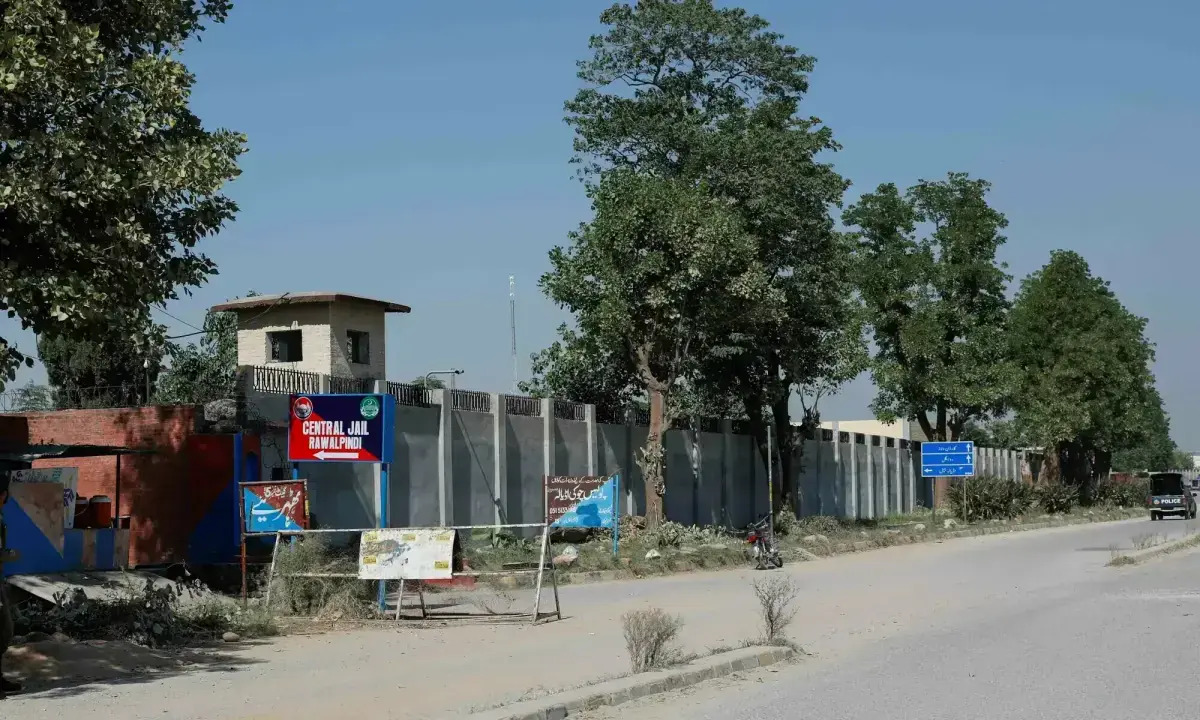
The standoff surrounding access to imprisoned former prime minister Imran Khan intensified on Tuesday at Rawalpindi's Adiala Jail, where authorities blocked his cousin, Qasim Zaman, from conducting a scheduled visit. According to Awais Younas Chaudhry, a legal representative for the Pakistan Tehreek-e-Insaf (PTI), the legal team and family members arrived at the facility around 2:00 PM local time and waited until past 4:00 PM before official confirmation of the denial was communicated.
This incident unfolds against a backdrop of prolonged incarceration spanning back to 2023. The Islamabad High Court (IHC) had previously issued explicit directives instructing the Adiala Jail superintendent to implement regular protocols, allowing the PTI founder bi-weekly meetings on Tuesdays and Thursdays with designated family members, legal counsel, and political associates. However, execution on the ground has repeatedly fallen short of judicial mandates. Traditionally, Imran Khan's sisters—Aleema Khan, Uzma Khan, and Noreen Niazi—have spearheaded weekly visits to the facility, only to face mounting bureaucratic hurdles, security roadblocks, and recent administrative detentions.
Commercial & Economic Implications
While ostensibly a legal and political development, the recurring friction surrounding Pakistan's high-profile political prisoners carries tangible economic weight. Kalyar Traders notes that persistent domestic instability, judicial uncertainty, and public friction directly influence macroeconomic indicators, including foreign direct investment (FDI) inflows, sovereign bond yields, and domestic retail sentiment.
Uncertainty regarding governance continuity affects wholesale distribution networks and retail trade in major urban centers like Rawalpindi, Islamabad, and Lahore. When political demonstrations or administrative clampdowns occur, commercial transportation corridors experience disruptions, impacting supply chain velocity and exerting upward pressure on local commodity prices and inflation. Business confidence relies heavily on the predictable enforcement of the rule of law; repeated deviations from high court orders create risk premiums that deter foreign and domestic capital deployment across industrial sectors.
Related Intelligence: Chokepoint Crisis: The Strategic and Economic Weight of Bab al-Mandab
Stakeholder Perspectives & Market Reactions
Legal experts and trade associations have expressed mounting unease over the growing divergence between judicial orders and executive implementation. Industry bodies emphasize that continuous political polarization dampens consumer demand in retail markets, as households adopt conservative spending habits amid fears of sudden civil disruptions.
PTI representatives have strongly condemned the restrictions, characterizing the denial of access to close relatives as a direct violation of fundamental human rights and constitutional protections. Conversely, administrative and security officials maintain that jail visits are regulated strictly in accordance with prevailing security assessments and standard operating procedures within high-security correctional facilities. Legal analysts warn that sustained defiance of high court directives risks triggering a deeper constitutional crisis, further complicating the country's delicate economic stabilization program backed by international financial institutions.
Forward Outlook & Key Watchpoints
Market observers, legal scholars, and business leaders are closely monitoring upcoming court proceedings in the Islamabad High Court to see whether contempt proceedings or stricter enforcement mechanisms will be initiated against prison authorities.
Key watchpoints for the commercial sector over the coming weeks include potential street protests by political workers, legislative developments regarding prison visitation rights, and any shifts in the posture of law enforcement agencies around major urban commercial hubs. Stability in these areas will dictate whether Pakistan can maintain its fragile economic recovery trajectory or face renewed market volatility driven by political friction.
Join Our Official WhatsApp Channel
Receive live commodity alerts, policy changes, and commercial intelligence directly on WhatsApp.