
US and China Advance AI Safety Framework Ahead of High-Stakes Summit
Senior US and Chinese officials convened in New York to negotiate a bilateral artificial intelligence safety framework ahead of a crucial leadership summit, balancing technological competition with vital risk-mitigation strategies.
Geopolitical & Core Developments
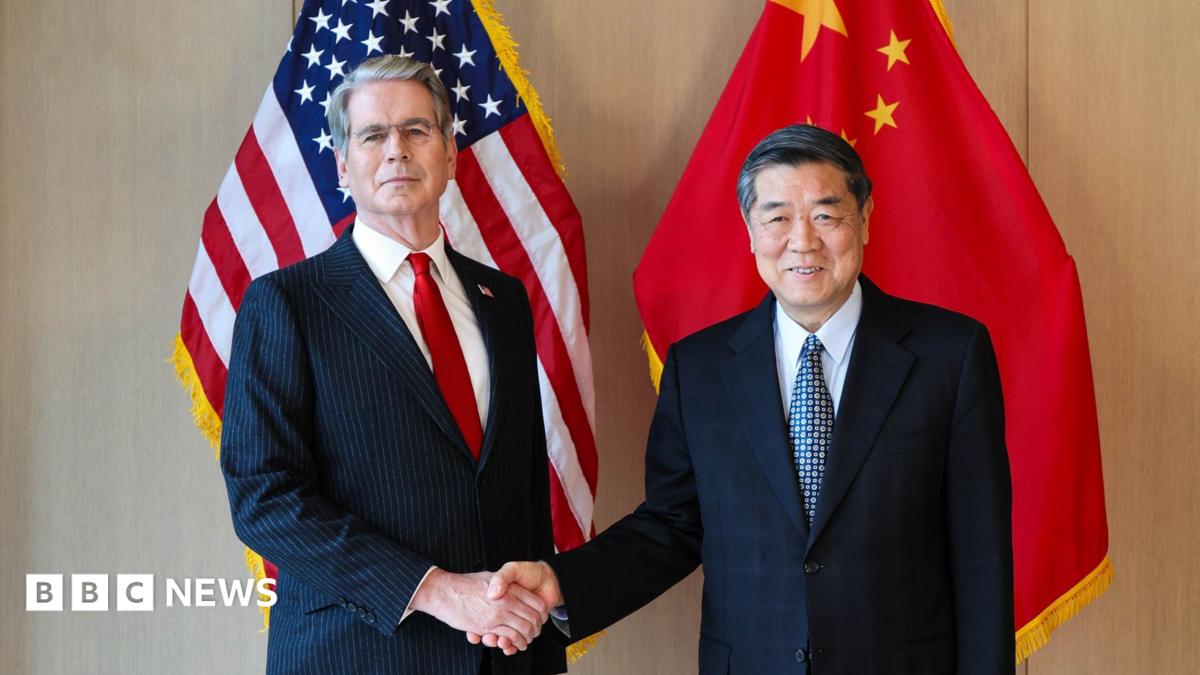
Top-tier diplomatic delegations from the United States and the People's Republic of China met in New York on Sunday for high-level consultations centered on artificial intelligence safety and technological risk management. The strategic dialogue, convened just days ahead of a highly anticipated summit between US President Donald Trump and Chinese President Xi Jinping, represents a calculated effort to establish bilateral guardrails in an increasingly contested technological domain. Despite profound strategic rivalries spanning trade, national security, and territorial sovereignty, both superpowers have recognized the imperative of managing the existential and systemic risks posed by frontier artificial intelligence models. The New York talks focused on establishing protocols for emergency communication, evaluating computational thresholds for mandatory safety testing, and addressing the proliferation of autonomous dual-use technologies. Diplomatic sources indicate that while profound divergences remain over semiconductor export controls and intellectual property protections, both capitals are keen to demonstrate constructive engagement on global public goods before the presidential summit.
Global Trade & Economic Ripples
The intersection of artificial intelligence governance and global commerce has profound implications for international trade, energy demand, and advanced manufacturing supply chains. As data centers expand exponentially to meet the computational demands of generative AI models, global energy markets face unprecedented structural shifts. The bilateral discussions in New York carry direct weight for transnational technology supply chains, encompassing advanced lithography equipment, rare earth elements critical for semiconductor manufacturing, and high-purity silicon. Commodity analysts note that any stabilization or de-escalation of techno-nationalist trade restrictions between Washington and Beijing could alleviate volatility in pricing for key technology inputs. Conversely, failure to align on regulatory frameworks risks exacerbating supply chain bifurcation, forcing multinational corporations to decouple critical infrastructure and duplicate research and development expenditures across separate Western and Eastern technology blocs.
Related Intelligence: US and China Propose AI Safety Measures During High-Stakes New York Talks
International Reactions & Diplomatic Stances
The international community has closely monitored the New York preparatory talks, welcoming the resumption of structured bilateral dialogue while urging both superpowers to broaden multilateral cooperation. Representatives from the United Nations Office for Disarmament Affairs emphasized the necessity of incorporating broader global stakeholder perspectives into any emerging US-China consensus on artificial intelligence governance. Meanwhile, European Union trade officials expressed cautious optimism, stressing that bilateral risk-mitigation frameworks must complement, rather than undermine, existing multilateral standards being developed through the OECD and the Global Partnership on Artificial Intelligence. Market analysts across major financial centers have interpreted the diplomatic engagement as a stabilizing signal for global equity markets, particularly for multinational technology conglomerates whose valuations remain highly sensitive to regulatory shocks and geopolitical friction.
Strategic Outlook & Future Scenarios
The trajectory of US-China relations following the upcoming Trump-Xi summit will heavily depend on whether these preliminary AI safety discussions translate into formal institutional mechanisms or remain merely consultative. Upcoming diplomatic touchpoints will likely test the durability of this engagement, particularly regarding proposed export controls on foundational algorithms and joint monitoring of advanced machine learning deployment. Geopolitical strategists outline two primary scenarios: a managed techno-rivalry where bilateral safety protocols prevent accidental escalation in cyberspace, or a hardening bifurcation where technological decoupling accelerates irrespective of diplomatic overtures. For global corporations and commodity traders, navigating this complex landscape requires continuous risk assessment, robust supply chain diversification, and vigilant monitoring of regulatory shifts in both Washington and Beijing.
Join Our Official WhatsApp Channel
Receive live commodity alerts, policy changes, and commercial intelligence directly on WhatsApp.