
Supreme Court Rules Marriage Can Be Dissolved on Shiqaq Grounds Without Proof of Cruelty
The Supreme Court ruled that a Muslim marriage can be dissolved on grounds of marital discord under the Dissolution of Muslim Marriages Act, 1939, even if physical or mental cruelty is not formally proven.
The Core Development
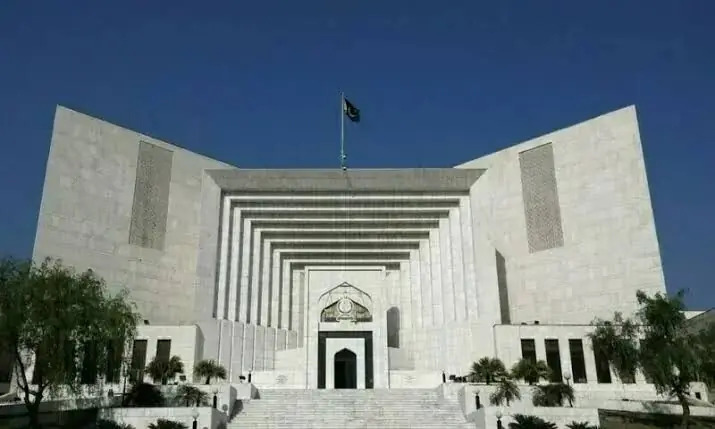
In a landmark legal development with profound societal and domestic implications across Pakistan, the Supreme Court ruled on Wednesday that a marriage can be dissolved on the grounds of shiqaq (irreconcilable marital discord) under a residuary provision of the Dissolution of Muslim Marriages Act, 1939, even in the absence of proven cruelty. The ruling was handed down by a high-powered five-member bench headed by Justice Shahid Waheed. The bench also comprised Justices Naeem Akhter Afghan, Muhammad Hashim Khan Kakar, Ishtiaq Ibrahim, and Miangul Hassan Aurangzeb, who collectively reviewed two connected petitions.
The core legal question centered on Section 2(ix) of the Dissolution of Muslim Marriages Act, which serves as a residuary provision outlining valid grounds for a woman to obtain a judicial decree for the dissolution of her marriage. Historically, litigants frequently bore the heavy evidentiary burden of establishing direct physical or psychological cruelty, financial abandonment, or other specific statutory infractions to secure a decree. Wednesday's ruling clarifies that intense, irreconcilable discord (shiqaq) alone can suffice under the law, preventing prolonged litigation in dysfunctional unions. The court explicitly noted in its written judgment: A marriage may be dissolved by a court, but neither spouse should be judicially deprived of a lawful right, nor judicially burdened with a stigma, without the foundation of law and evidence.
Commercial & Economic Implications
While primarily a matter of family law and jurisprudence, structural legal reforms governing domestic arrangements hold indirect yet substantial ripple effects for consumer markets, retail trade, and household expenditure patterns in Pakistan. Family law disputes and prolonged litigation consume considerable financial resources, often draining household savings across both urban and rural demographics. By streamlining the legal pathways for marital dissolution through recognized provisions like shiqaq, the judicial system reduces protracted court battles that historically crippled personal finances, legal fees, and asset liquidity for disputing parties.
Furthermore, efficient legal frameworks concerning family settlements directly influence female workforce participation, independent housing demand, and consumer spending dynamics. When marital disputes find prompt and equitable legal closure without requiring exhaustive proof of severe cruelty, women can transition faster toward economic independence, property settlements, and active participation in the formal economy. For commercial sectors catering to housing, retail goods, and services, predictable family law adjudication helps stabilize consumer confidence and supports targeted spending within urban centers.
Related Intelligence: Supreme Court Dismisses Sindh Appeal in Baldia Factory Fire Acquittals
Stakeholder Perspectives & Market Reactions
Legal experts, human rights advocates, and family law practitioners have responded to the Supreme Court's judgment with widespread acclaim, viewing it as a progressive step toward alleviating unnecessary suffering in deadlocked marriages. Bar associations noted that lower courts frequently struggled with conflicting precedents regarding whether shiqaq could be invoked independently of cruelty clauses. This ruling provides definitive, binding guidance that harmonizes judicial application nationwide.
Conversely, conservative social commentators have urged caution, emphasizing that family courts must rigorously evaluate evidence of discord to prevent misuse of residuary provisions. Business and trade circles have observed the ruling as part of a broader institutional evolution toward legal clarity and efficiency. Stakeholders across civil society maintain that while the ruling prioritizes individual rights, its ultimate success depends on how expeditiously family courts implement these standards during day-to-day trial proceedings.
Forward Outlook & Key Watchpoints
Following this authoritative pronouncement by the apex court, attention shifts to the Federal Shariat Court and provincial high courts, which must align subordinate family court procedures with the Supreme Court's interpretation of Section 2(ix). Legal analysts will closely monitor future case law to determine whether lower judiciary benches accelerate the disposal of pending family disputes where shiqaq is pleaded.
Key watchpoints for policymakers and legal observers include the potential drafting of standardized evidentiary guidelines for establishing shiqaq, training modules for family court judges to balance expedition with fairness, and statistical tracking of average trial durations for dissolution suits. Ensuring that neither party suffers unwarranted financial prejudice or social stigma during these proceedings remains the ultimate operational benchmark for Pakistan's judicial administration.
Join Our Official WhatsApp Channel
Receive live commodity alerts, policy changes, and commercial intelligence directly on WhatsApp.