
Punjab CM Maryam Nawaz Urges Five-Year Term Continuity for Economic Stability
Punjab Chief Minister Maryam Nawaz advocates for uninterrupted five-year governmental terms to ensure policy continuity, economic stability, and investor confidence across Pakistan.
The Core Development
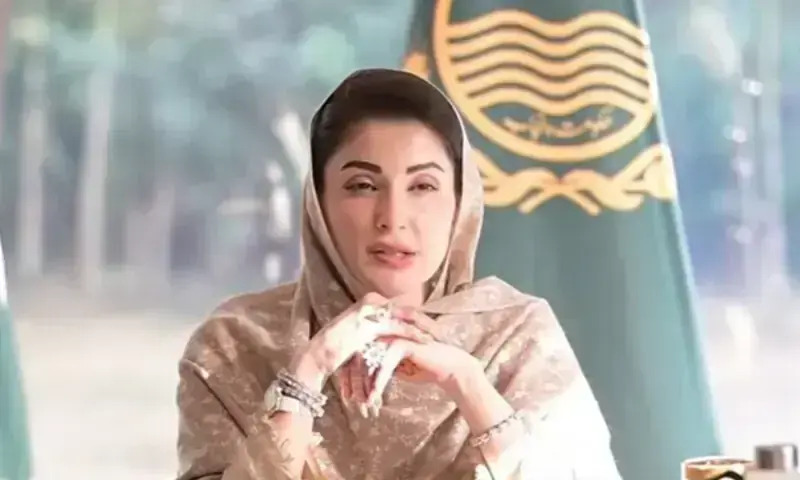
In a significant address emphasizing the intersection of governance and national stability, Punjab Chief Minister Maryam Nawaz asserted that democratically elected administrations demonstrating effective performance must be permitted to complete their mandated five-year terms. Speaking before a high-level delegation participating in the National Command Authority Senior Officers Leadership Course in Lahore on Thursday, the Chief Minister underscored that frequent political disruptions and abrupt changes in government have historically crippled Pakistan's developmental trajectory.
Detailing the administration's stance on state affairs, CM Maryam pointed toward recent geopolitical friction with India, claiming that Pakistan projected an exemplary image of resilience and capability during the crisis. She lauded the armed forces and security institutions for their relentless defense contributions, arguing that robust internal security is fundamentally tethered to transparent governance, equitable resource distribution, and rigorous socio-economic performance across all federating units.
Commercial & Economic Implications
For the domestic business community, wholesale distributors, and retail trade networks across Pakistan, the discourse surrounding political continuity is not merely academic; it strikes at the heart of operational predictability. Chronic policy volatility has historically injected severe friction into supply chains, triggering erratic fluctuations in commodity prices, currency devaluation risks, and stubborn inflationary pressures. When regulatory frameworks and fiscal policies shift with every administrative transition, commercial enterprises find it nearly impossible to execute long-term capital investments.
In retail and wholesale sectors, predictable fiscal policies are vital for inventory management, import-export planning, and price stabilization. Investors require a minimum horizon of five years to evaluate return on investment, particularly in capital-intensive sectors like manufacturing, energy, and agriculture. Interruptions in policy execution disrupt taxation frameworks, industrial subsidies, and infrastructural development, ultimately squeezing consumer purchasing power and worsening cost-of-living crises for ordinary households.
Related Intelligence: Canada Labor Overhaul Sparks Global Trade and Supply Chain Concerns
Stakeholder Perspectives & Market Reactions
Business councils, corporate leaders, and trade associations have consistently maintained that economic recovery is impossible without a bipartisan charter of economy that survives political cycles. While political rhetoric often centers on short-term relief measures, industrial bodies argue that structural reforms—such as broadening the tax base, reforming state-owned enterprises, and lowering energy tariffs—demand unwavering, multi-year policy enforcement.
Legal and political analysts note that Chief Minister Maryam Nawaz's call reflects a growing realization within mainstream political parties that market confidence is fragile. However, market reactions remain cautious. Traders and investors demand tangible legislative mechanisms and institutional safeguards to guarantee that policy shifts do not occur arbitrarily, regardless of which political coalition holds power in Islamabad or provincial capitals.
Forward Outlook & Key Watchpoints
As Pakistan navigates complex economic stabilization programs under international lenders, the primary watchpoint for markets will be whether political stakeholders can forge a consensus on governance longevity. Key indicators to monitor include upcoming fiscal policy adjustments, consistency in export-oriented incentives, and the implementation of structural reforms pledged under ongoing financial frameworks.
Ultimately, the transition from political rhetoric to actionable administrative continuity will determine whether Pakistan can attract foreign direct investment and foster sustainable domestic commercial growth in the coming years.
Join Our Official WhatsApp Channel
Receive live commodity alerts, policy changes, and commercial intelligence directly on WhatsApp.