
Pakistan, Turkiye, and Saudi Arabia Sign Rapid Force Deployment Pact
Pakistan, Turkiye, and Saudi Arabia have agreed to rapid military force deployment under the Makkah Joint Defence Agreement to counter regional security threats.
The Core Development
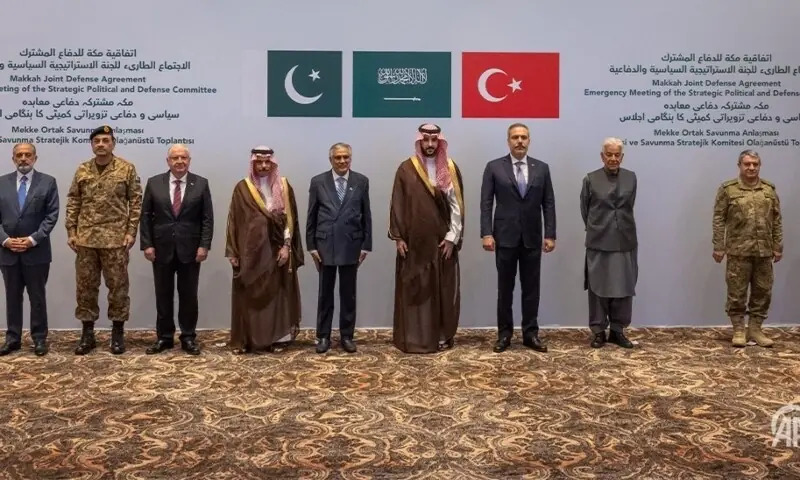
In a landmark security realignment, Pakistan, Saudi Arabia, and Turkiye have formally agreed to the rapid deployment of military forces and advanced capabilities within the kingdom. The decision was finalized following an emergency session of the Strategic Political and Defence Committee (SPDC) of the Makkah Defence Alliance, held in Riyadh. According to the Foreign Office (FO), the tripartite meeting was convened to evaluate escalating security developments and emerging strategic threats facing Saudi Arabia and the broader region.
The committee formally resolved to transition immediately from conceptual frameworks to the practical implementation of collective defence commitments. This involves mobilizing agreed military units and defense capabilities to ensure their swift and seamless deployment across strategic locations in Saudi Arabia. The measures strictly adhere to approved operational arrangements and the respective national legislations of the participating states, designed explicitly to optimize military integration, maximize combat readiness, and fortify collective deterrence against external aggression.
Commercial & Economic Implications
For business enterprises, wholesale distributors, and retail markets in Pakistan, geopolitical stability and strategic alliances carry profound economic weight. The formalization of the Makkah Defence Alliance directly impacts investor confidence and macroeconomic stability in Pakistan by reinforcing bilateral financial ties with the Gulf Cooperation Council (GCC). Enhanced security cooperation between Islamabad and Riyadh ensures the long-term stability of vital energy supply corridors, directly mitigating risks of imported fuel price shocks that routinely drive domestic inflation.
Furthermore, closer military-industrial collaboration between Pakistan, Turkiye, and Saudi Arabia opens new avenues for defense manufacturing, technology transfer, and joint commercial ventures. Stable energy markets and predictable shipping routes through the Arabian Sea and the Red Sea are paramount for Pakistani exporters and importers alike. By neutralizing regional volatility, this strategic pact safeguards international supply chains, stabilizes domestic retail prices for essential commodities, and protects foreign direct investment inflows crucial for Pakistan's fiscal recovery.
Related Intelligence: Pentagon Halts Anthropic AI Use Following Supply Chain Risk Designation
Stakeholder Perspectives & Market Reactions
Leading trade bodies, chambers of commerce, and financial analysts in Pakistan have responded positively to the announcement, viewing the enhanced tripartite security framework as a cornerstone for sustainable economic engagement. Representatives from major industrial associations noted that robust geopolitical partnerships reduce sovereign risk premiums, thereby lowering capital borrowing costs for Pakistani enterprises operating within joint ventures in the Gulf.
Official statements from the Foreign Office emphasize that the alliance is purely defensive in nature and structured to promote regional peace. Legal and policy experts have underscored that the execution of the Makkah Joint Defence Agreement complies fully with international norms and constitutional frameworks. Public sentiment reflects cautious optimism, with business leaders highlighting that strategic alignment with major economic partners like Saudi Arabia and Turkiye provides essential leverage for national economic resilience.
Forward Outlook & Key Watchpoints
As the Makkah Defence Alliance transitions into its operational phase, stakeholders must monitor several critical milestones. Key watchpoints include the finalization of standard operating procedures for joint force deployments, the establishment of permanent coordination centers in Riyadh, and the timeline for tactical exercises involving Pakistani, Turkish, and Saudi military contingents.
For the business community in Pakistan, tracking subsequent bilateral trade agreements and defense production protocols tied to this security pact will be crucial. Policymakers and market analysts will evaluate how rapidly these defense commitments translate into broader economic cooperation, foreign investments, and long-term monetary stability across the region.
Join Our Official WhatsApp Channel
Receive live commodity alerts, policy changes, and commercial intelligence directly on WhatsApp.