
Canada Backs Groundbreaking European Union Associate Membership Proposal to Deepen Ties
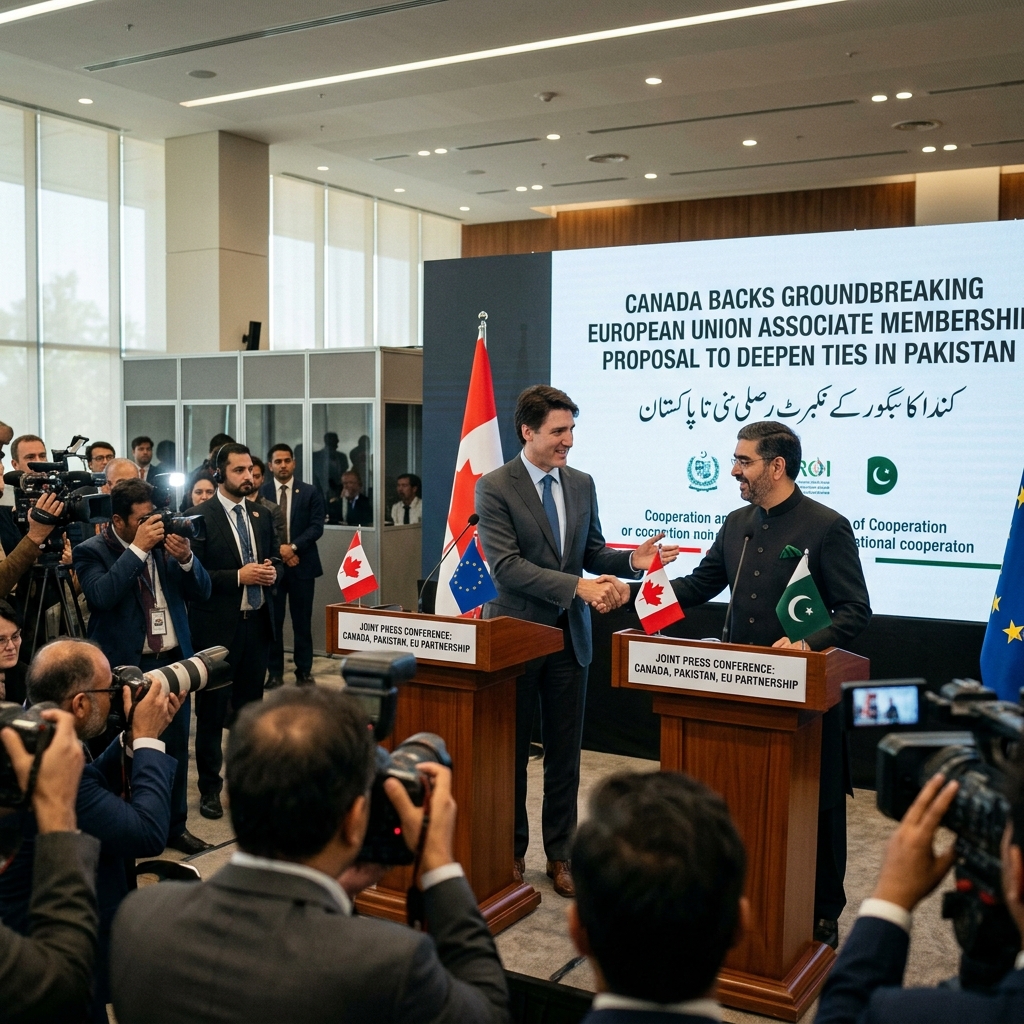
Canada has welcomed an unprecedented European Union proposal for associate member status, aiming to create a strategic democratic alliance while integrating transatlantic industrial, energy, and critical mineral supply chains.
Geopolitical & Core Developments
In a historic realignment of transatlantic diplomacy, Canada has officially welcomed an exploratory proposal from the European Union to establish an 'associate member' status for Ottawa. Canadian Prime Minister Mark Carney characterized the prospective partnership as a 'beacon for other democracies,' emphasizing the imperative for liberal market economies to consolidate strategic depth amidst escalating global volatility.
The framework represents the most consequential structural evolution in EU external relations since the creation of the European Economic Area. By extending beyond conventional free trade compacts such as the Comprehensive Economic and Trade Agreement (CETA), the proposed associate status would integrate Canadian policymakers into select European Commission working councils, scientific research consortia, and strategic planning bodies. The move is widely interpreted as a calibrated maneuver to institutionalize transatlantic governance against geopolitical revanchism in Eastern Europe and systemic trade disruptions across the Indo-Pacific, creating an institutional bulwark capable of withstanding broader global fragmentation.
Global Trade & Economic Ripples
From an international commercial perspective, an enhanced Canada-EU architecture carries profound ramifications for critical supply chains, raw material procurement, and energy security. Foremost among these is the alignment of critical mineral corridors. Canada holds substantial unexploited reserves of lithium, nickel, cobalt, and rare earth elements—resources pivotal to European industrial decarbonization and automotive manufacturing, which currently rely excessively on Chinese refining capacity.
Simultaneously, the convergence is poised to reshape commodity and energy trade. European industrial centers continue to seek diversified, low-carbon imports following the decoupling from Russian hydrocarbons. Canada’s burgeoning capacity in liquefied natural gas (LNG), clean hydrogen, and civil nuclear technology positions Ottawa as a primary energy backstop for the European continent. Furthermore, formal regulatory harmonization could grant Canadian agricultural and manufactured exports exemptions or preferential pathways under the EU's Carbon Border Adjustment Mechanism (CBAM), mitigating tariff risks and stabilizing bilateral trade flows while standardizing environmental and digital benchmarks across the Atlantic.
Related Intelligence: South Korea Rejects Iran Military Deployment Amid Deepening Middle East Tensions
International Reactions & Diplomatic Stances
Official reaction in Brussels reflected cautious optimism, with European Commission leaders highlighting the necessity of partnering with like-minded, resource-sovereign democracies. European officials stressed that while associate status would not confer full internal market access or voting rights on treaty amendments, it establishes an institutional bridge unprecedented for a non-European sovereign state.
In Washington, trade analysts and foreign policy observers are assessing the structural implications for the United States-Mexico-Canada Agreement (USMCA). While the United States has consistently advocated for allied supply-chain 'friend-shoring,' Ottawa's closer institutional integration with Brussels could introduce regulatory friction, particularly regarding digital service taxation, subsidy transparency, and divergent antitrust frameworks. Multilateral institutions, including the World Trade Organization, have characterized the development as a notable shift toward plurilateralism, where middle powers construct high-standard coalitions outside traditional multilateral deadlocks.
Strategic Outlook & Future Scenarios
Moving forward, the initiative faces substantive administrative and political thresholds before formalization. Joint working groups across Brussels and Ottawa are scheduled to define the legal parameters of associate membership ahead of the upcoming G7 and EU-Canada bilateral summits. Critical negotiating fronts will involve defense procurement integration under the EU's Permanent Structured Cooperation (PESCO) framework and reciprocal access to sovereign procurement tenders.
Should the Canadian model succeed, it could establish an enduring template for other advanced democratic economies, including Japan, South Korea, and Australia, to forge institutionalized affiliations with the European bloc. However, ratification risks persist, as any comprehensive treaty expansion will require consensus among the EU’s 27 member states, several of which harbor lingering domestic agricultural sensitivities. Nevertheless, the prevailing strategic imperative to safeguard democratic supply chains suggests that both Ottawa and Brussels will aggressively pursue this historic convergence.
Join Our Official WhatsApp Channel
Receive live commodity alerts, policy changes, and commercial intelligence directly on WhatsApp.